News and Updates
A snapshot of what’s happening at the Boyne Rivers Trust
Sign up to our Newsletter for quarterly updates on the work of Boyne Rivers Trust straight to your inbox.
Keep reading below for an update on our work lately.
Read our most recent newsletter here.
BRT Press Release on Recent Fish Kills
Boyne Rivers Trust has expressed its deep concern following numerous fish kills across County Meath in recent weeks, where more than 1,000 fish were killed in two separate incidents on the Boycetown River, a tributary of the Boyne River near Trim, and the Moynalty River north of Kells.
You can read the Press Release in full here.
New Board Members
We’re delighted to welcome our new board members, Angela Duffy, Joe Casey and Hannah Gilligan. We are already seeing their positive contribution to the work of the Trust, and we’re looking forward to what’s to come!
BRT Features on RTÉ CountryWide
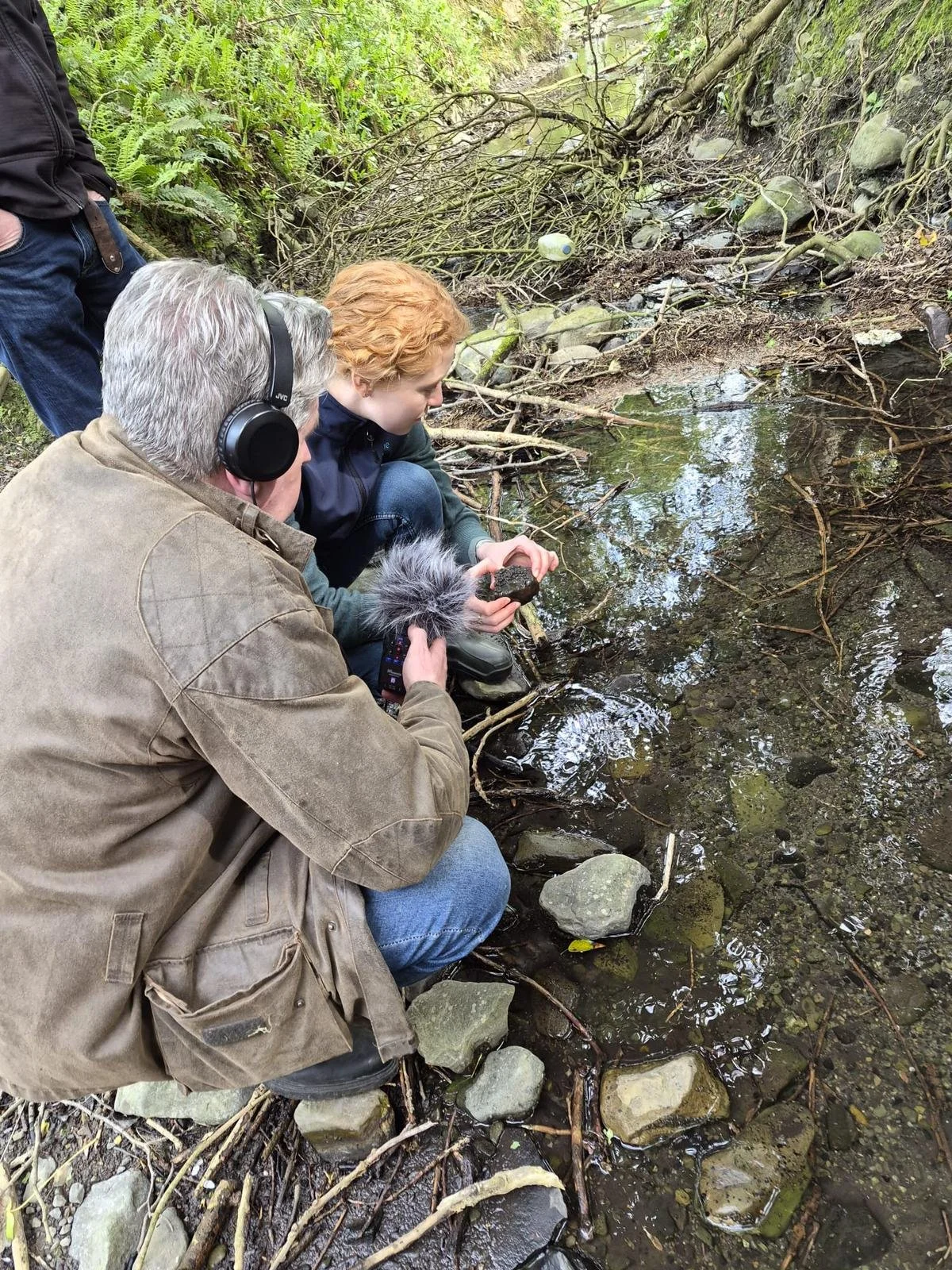
We were delighted to feature on RTÉ’s CountryWide, interviewed by Philip Boucher-Hayes. We spoke about our collaboration with local farmers to restore riparian woodlands throughout the catchment through our Floodplain Woodlands Project and Water-friendly Farming Project. Philip was joined by Sarah (our Farm Advisor & Project Coordinator) and Farmer Rosaleen to talk about the plans for her farm, before catching up with Muireann (our Development Manager) at our Tree Nursery in Townley Hall. If you’d like to listen to the radio segment, you can do so on RTÉ’s website here.
Himalayan Balsam Awareness
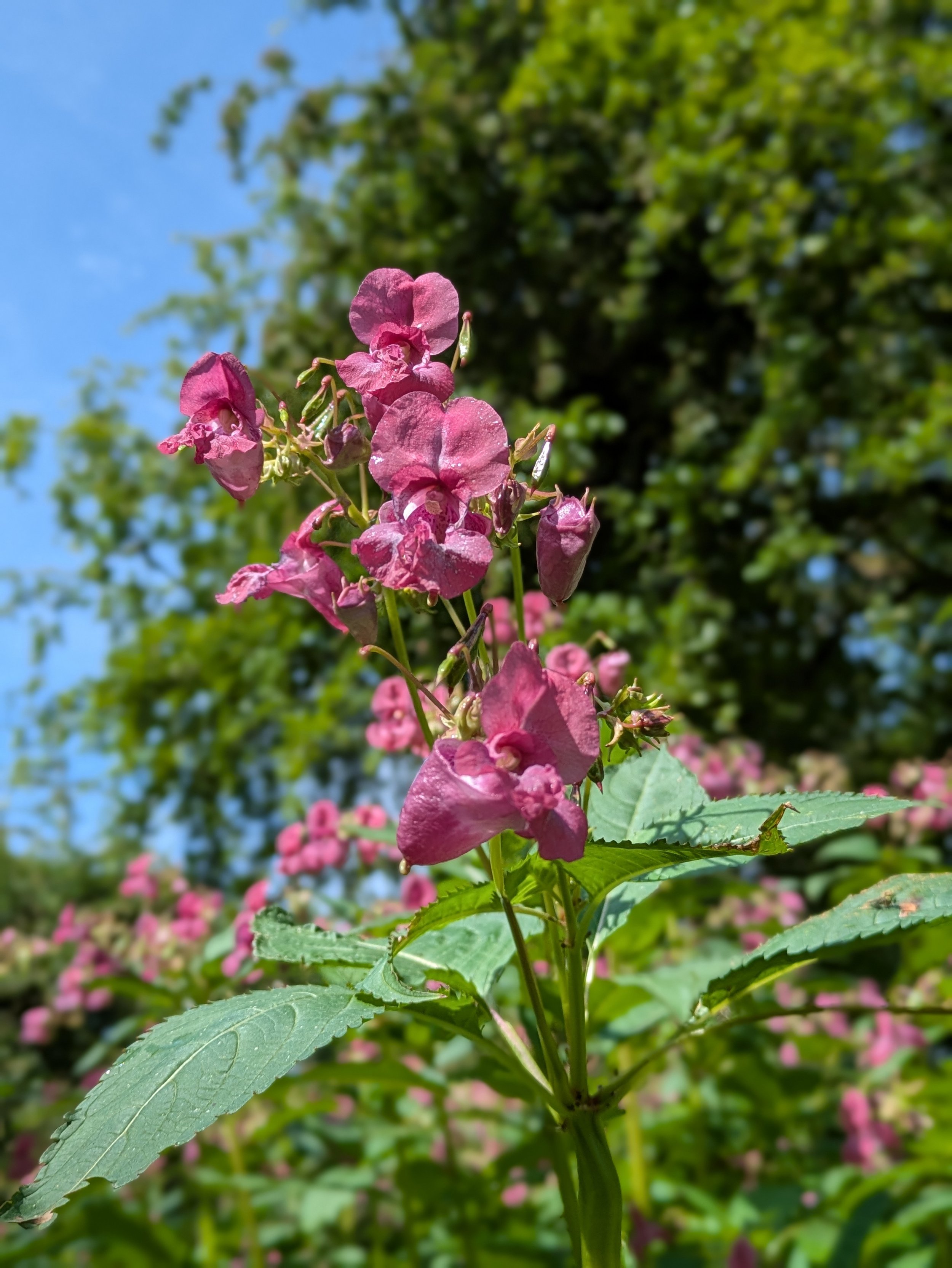
Himalayan Balsam (Impatiens glandulifera) is an invasive species threatening our rivers and other habitats. It is commonly found in damp areas, such as the banks of rivers, streams and lakes, ditches, damp meadows, and woodlands, where it can form dense stands and outcompete native plants. It typically flowers from June to October, so now is a good time to learn to identify it!
Have you spotted it in your area? Let us know on info@boyneriverstrust.ie
What Can You Do?
Learn to identify Himalayan Balsam.
Join a "Balsam Bashing" activity - Himalayan Balsam is easy to remove!
Report sightings of invasive species to the National Biodiversity Data Centre.
Himalayan Balsam Bashing
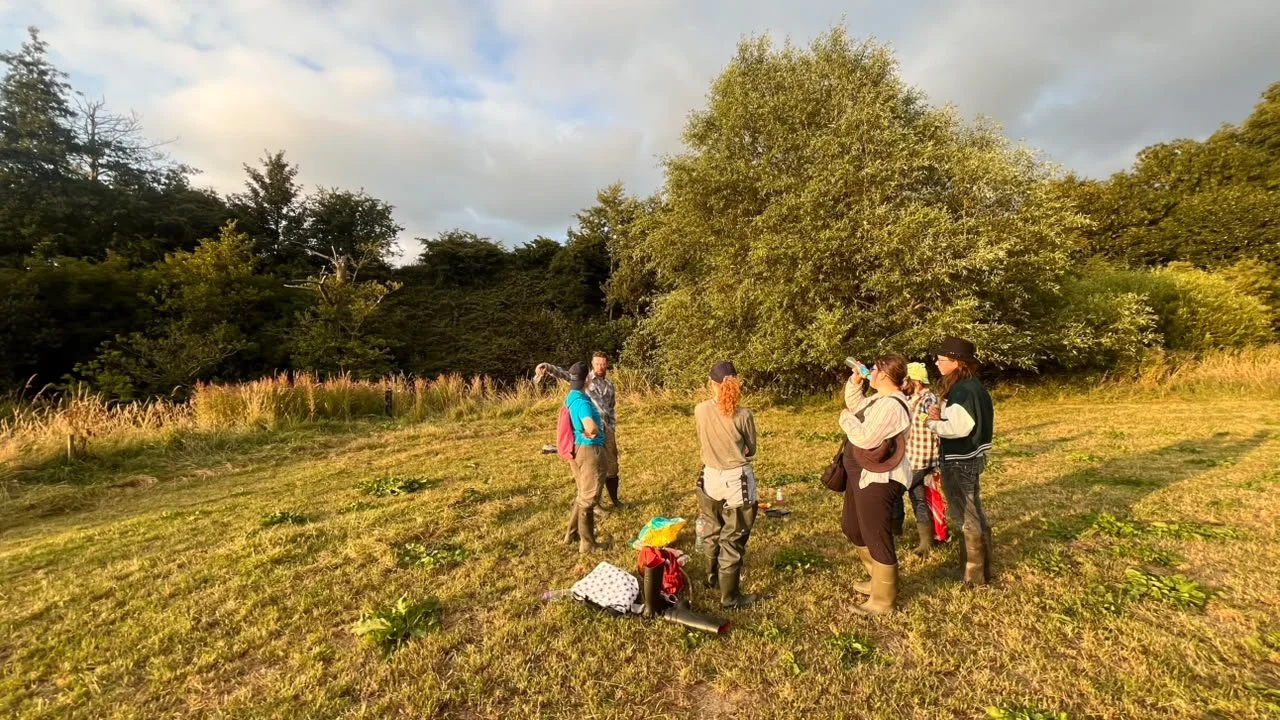
We’ve been out on the riverbanks “Balsam Bashing”, removing this invasive species with the help of wonderful volunteers. We’ve nearly finished clearing Himalayan Balsam from a 600m stretch of river on the River Mattock near Slane, County Meath. Underneath the balsam, there was almost nothing growing on the sandy riverbanks; Himalayan Balsam is know to reduce plant species richness in an area by 25%. Thanks to the Rivers Trust Ireland for their support.
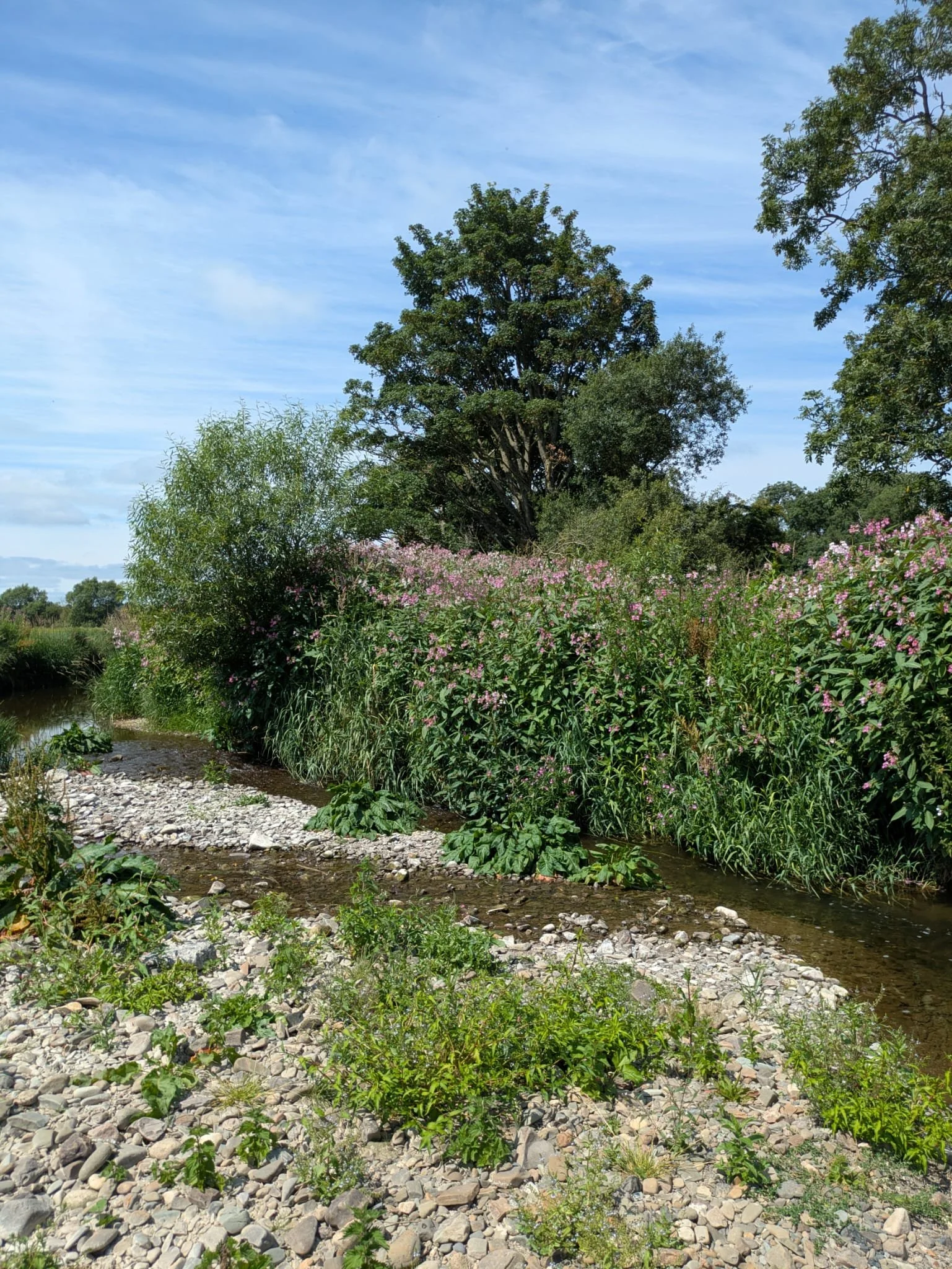
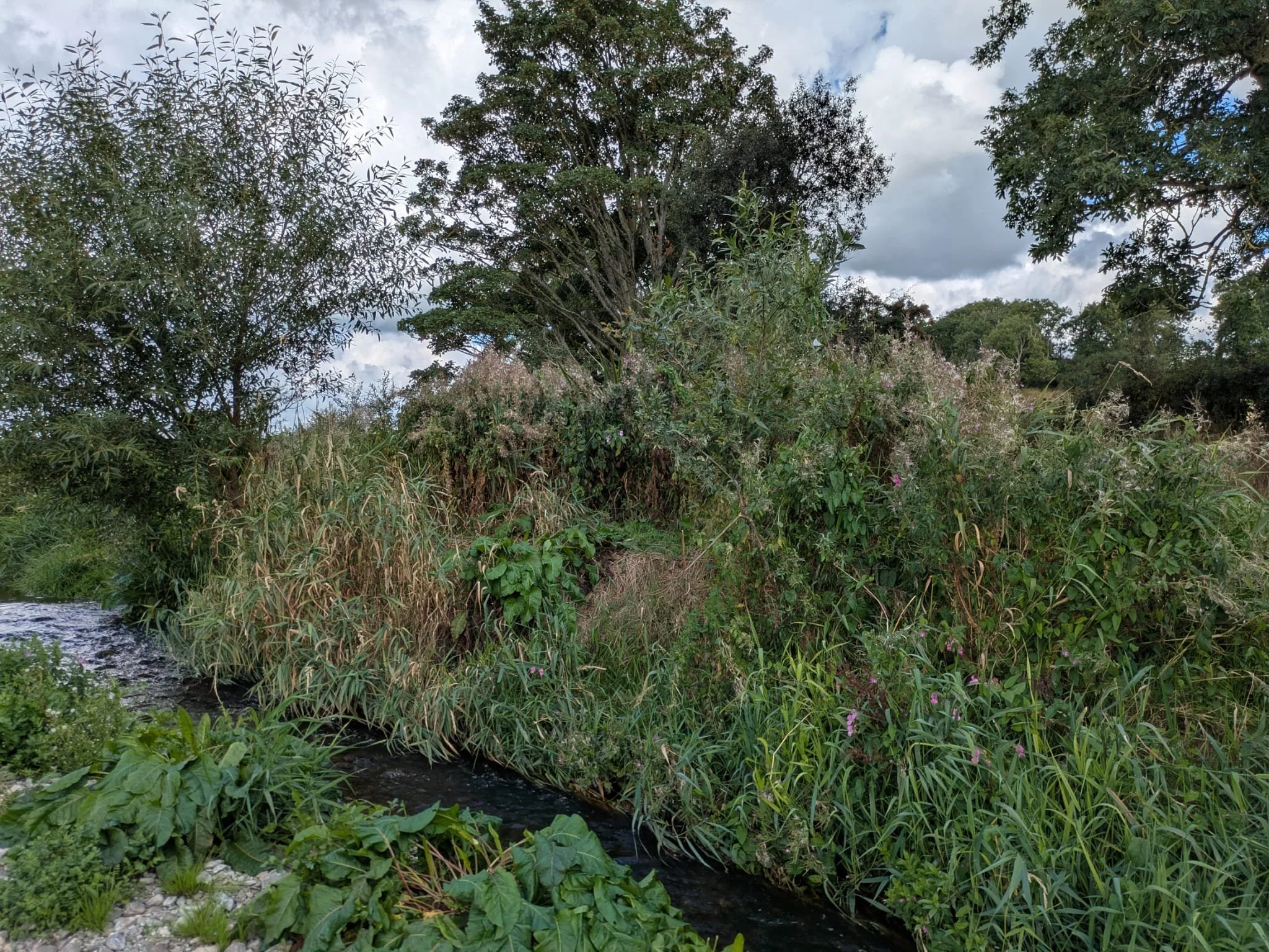
Before Balsam Bashing - Himalayan Balsam dominating the riverbank.
After Balsam Bashing - Native plant species remain in place on the bank.
We’ve been out on the riverbanks “Balsam Bashing”, removing this invasive species with the help of wonderful volunteers. We’ve nearly finished clearing Himalayan Balsam from a 600m stretch of river on the River Mattock near Slane, County Meath. Underneath the balsam, there was almost nothing growing on the sandy riverbanks; Himalayan Balsam is know to reduce plant species richness in an area by 25%. Thanks to the Rivers Trust Ireland for their support.
River Clady Restoration Project
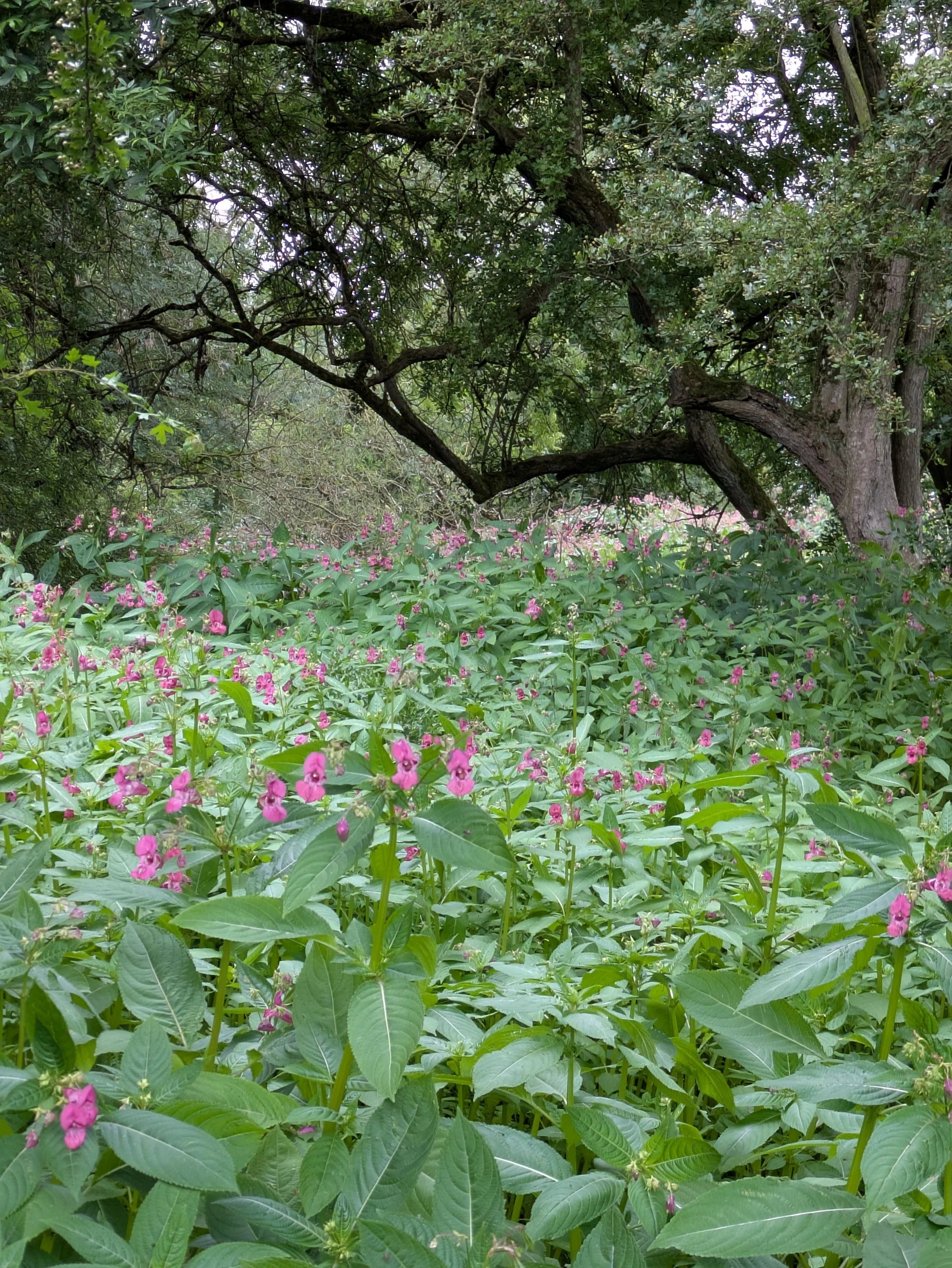
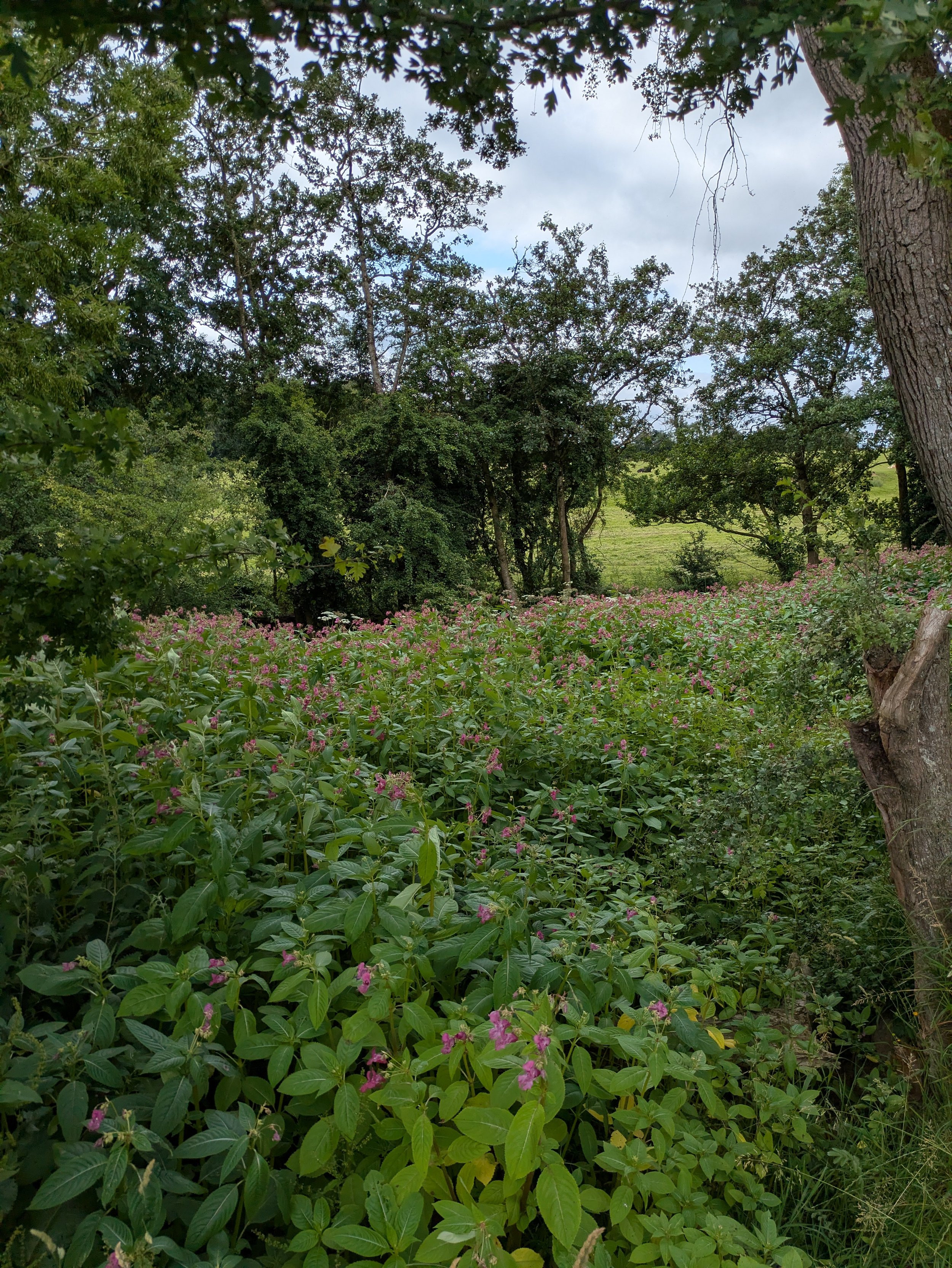
Before Balsam Bashing: Dense stand of Himalayan Balsam
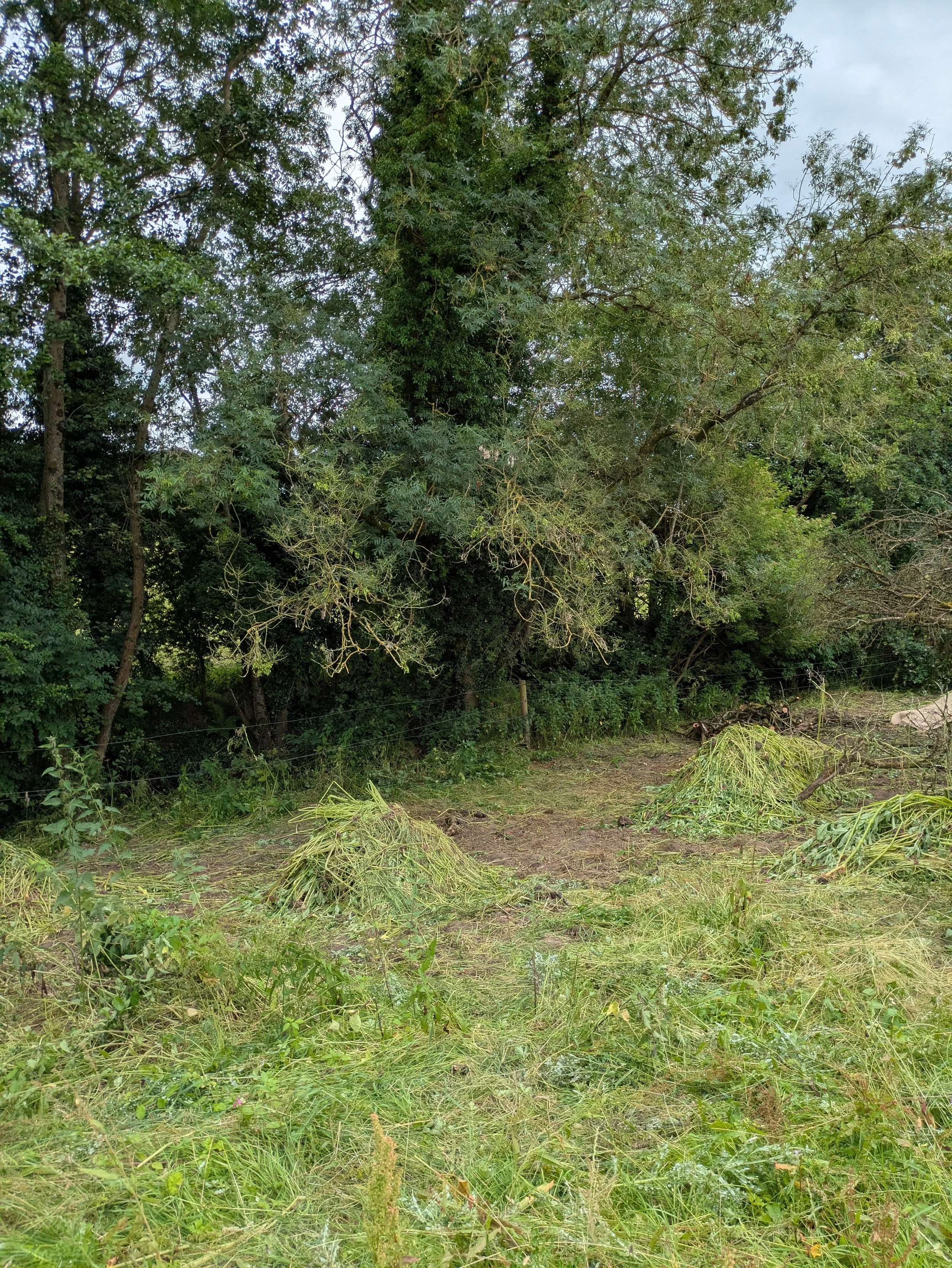
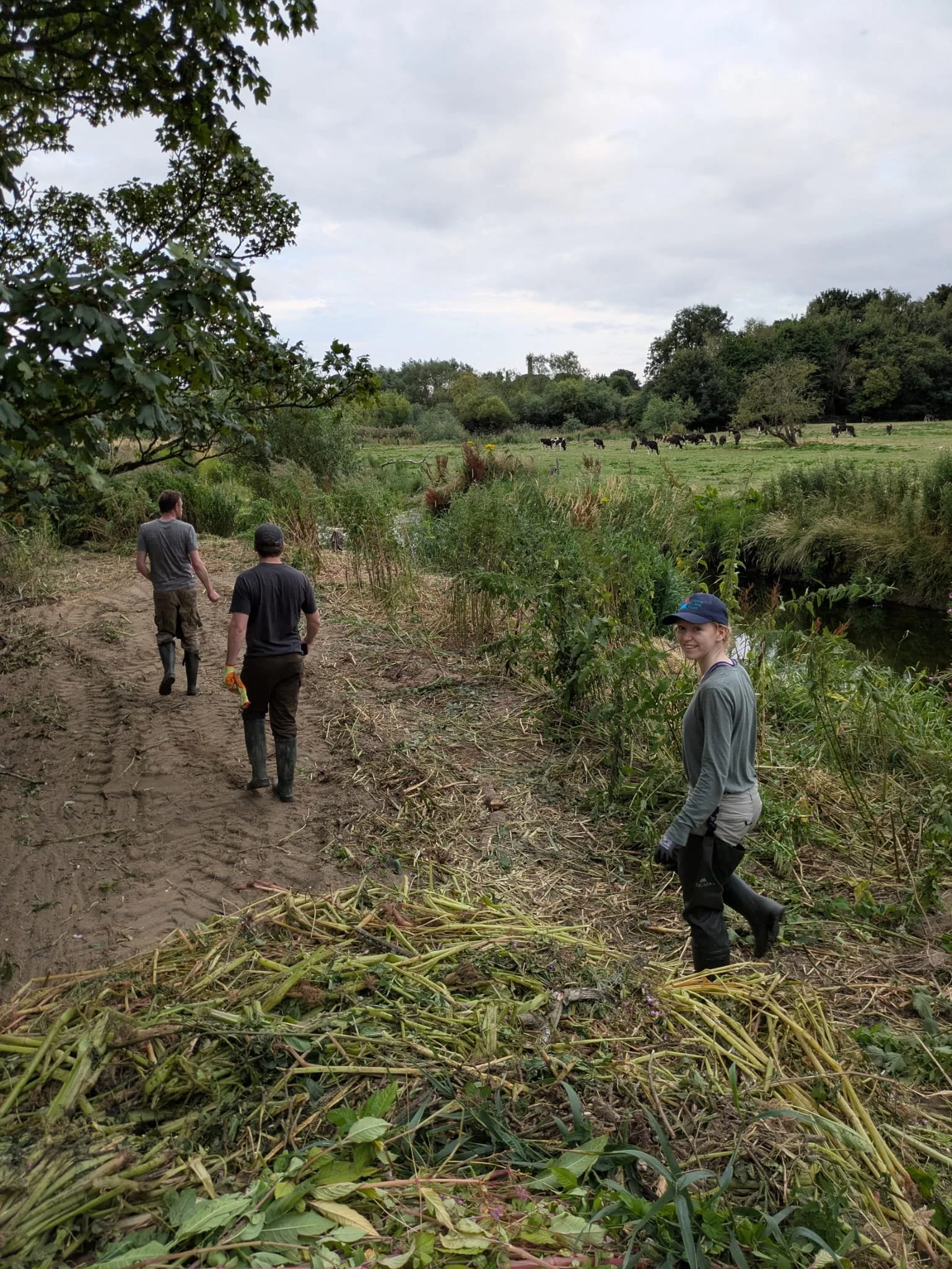
After Balsam Bashing: Piles of Himalayan Balsam left to decompose.
School Workshops
In June, we visited the students of Dunderry National School to tell them about local wildlife and threats to the River Clady, in particular all the footballs in the river! Together, the students brainstormed ways to prevent footballs from getting in the river, which included “Stop driving the footballs over the fence!”, and telling an adult if they lose a football in or near the water. Below you’ll see some of their great artwork which will help us spread the word about the River Clady!
If you or anyone you know lives or farms along the River Clady and you’d like to chat about how we’re working to restore the river, please get in touch! You can email us at info@boyneriverstrust.ie
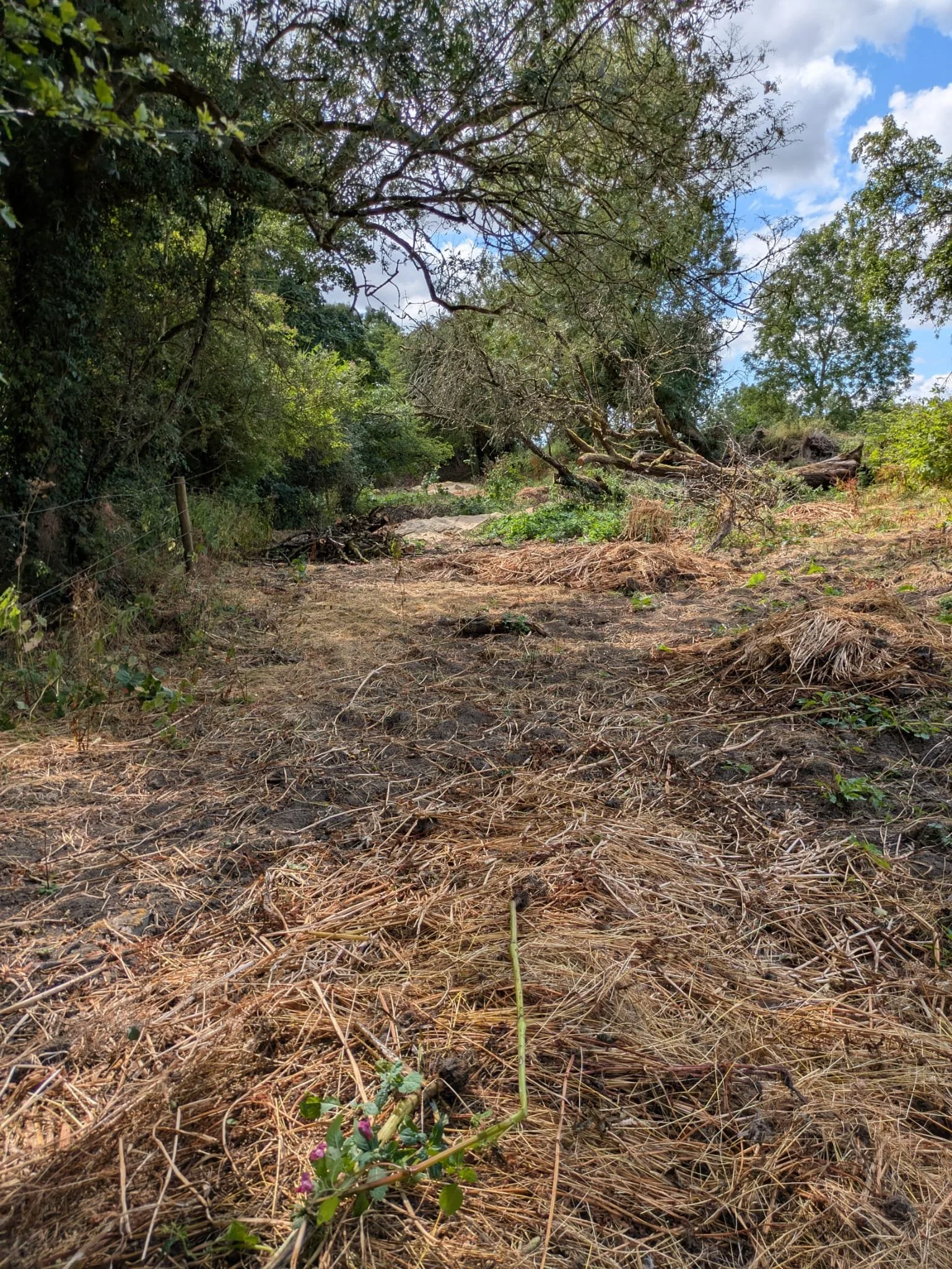
4 weeks later: The Himalayan Balsam piles are rotting down nicely.
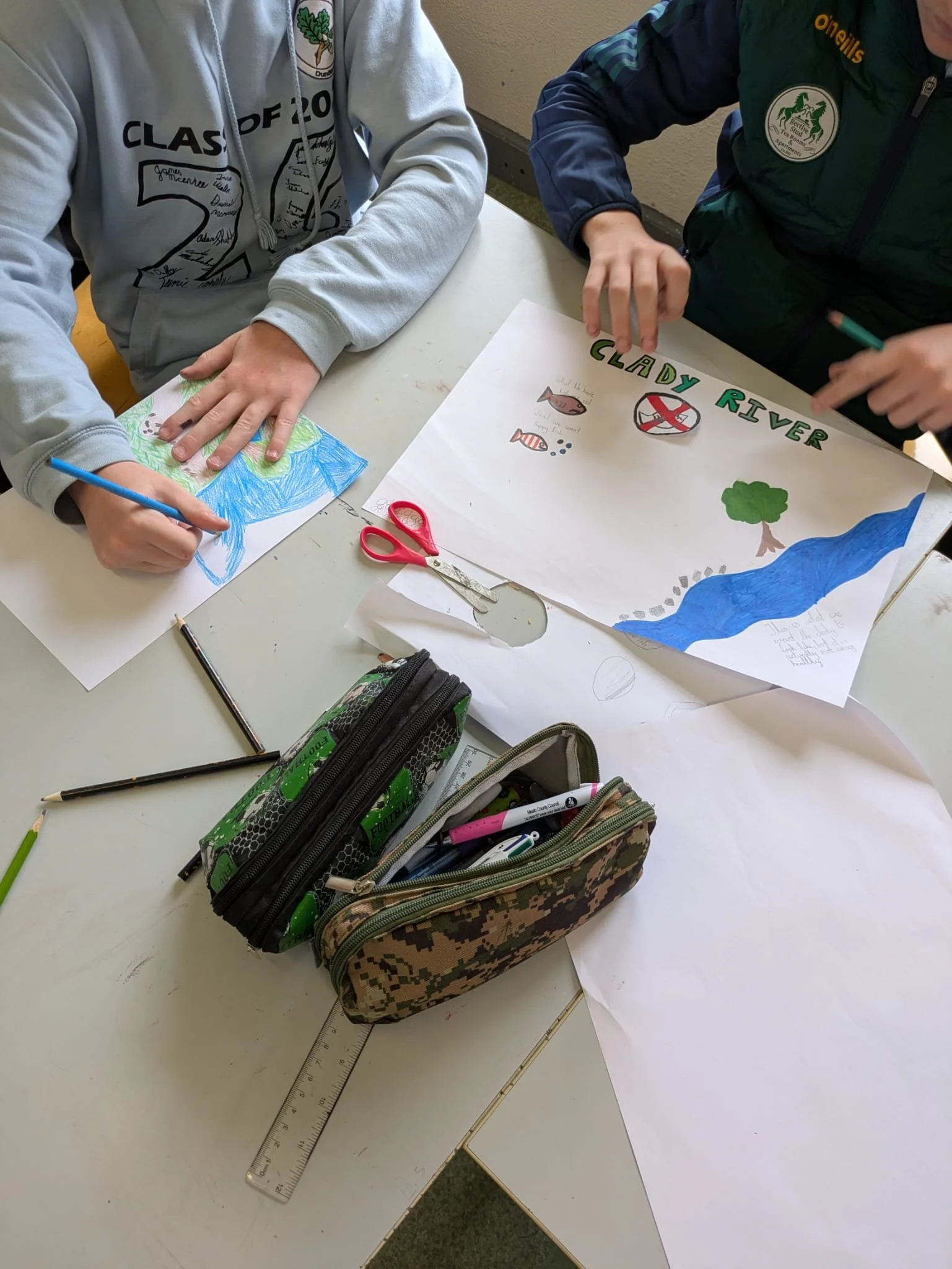
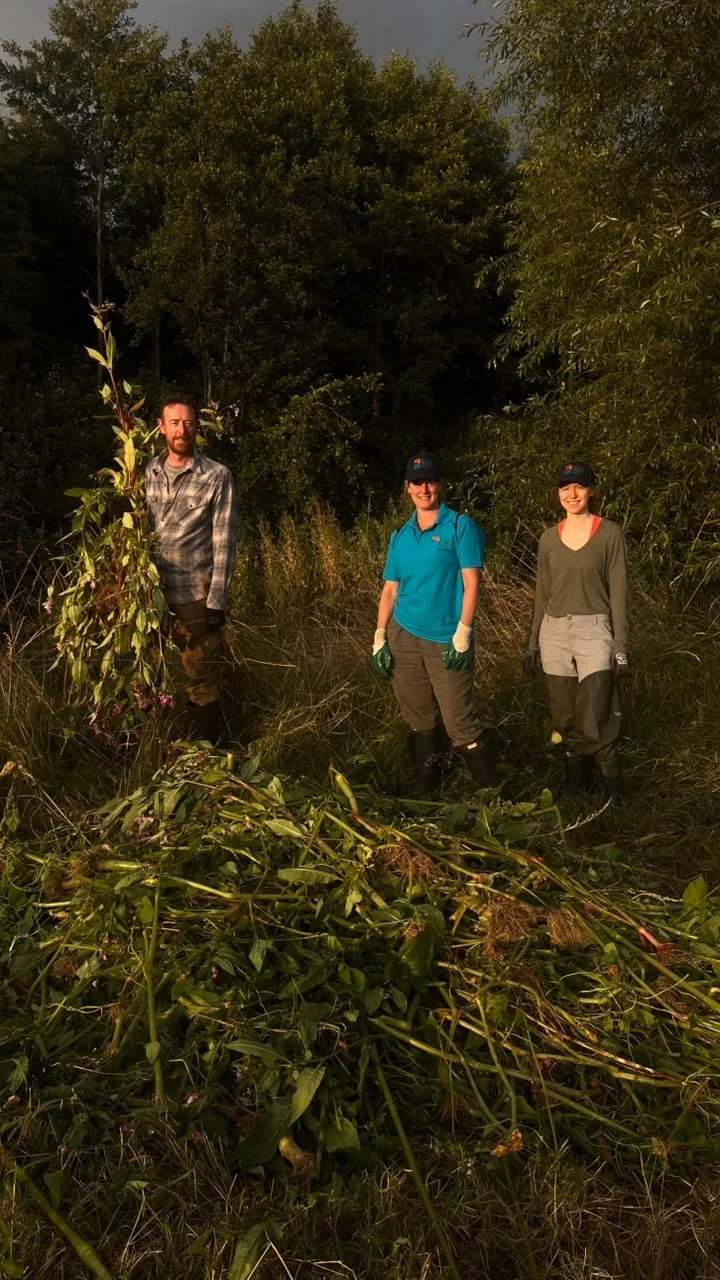
As part of our restoration efforts on the River Clady near Navan, County Meath, we recently did some Balsam Bashing, clearing a stand of over 1000m2! We’ve also been busy with school workshops and landowner engagement along the river.
In summer 2025, we commissioned an ecological survey of the River Clady, during which several stands of Himalayan Balsam were identified. One particularly large stand, this year measuring 1,029m2, was our starting point! The landowner kindly gave us access to clear the stands of balsam; with their help, and that of ecologists at IDEC and volunteers, we cleared the area in great time!
We will monitor the area in the coming months for any remaining Himalayan Balsam plants. The seeds can survive in the soil for 2-3 years, so we plan to return over the next few years to remove any re-emerging balsam. Take a look at some before and after photos below.
With thanks to our Funders:

Riparian Woodlands Restoration
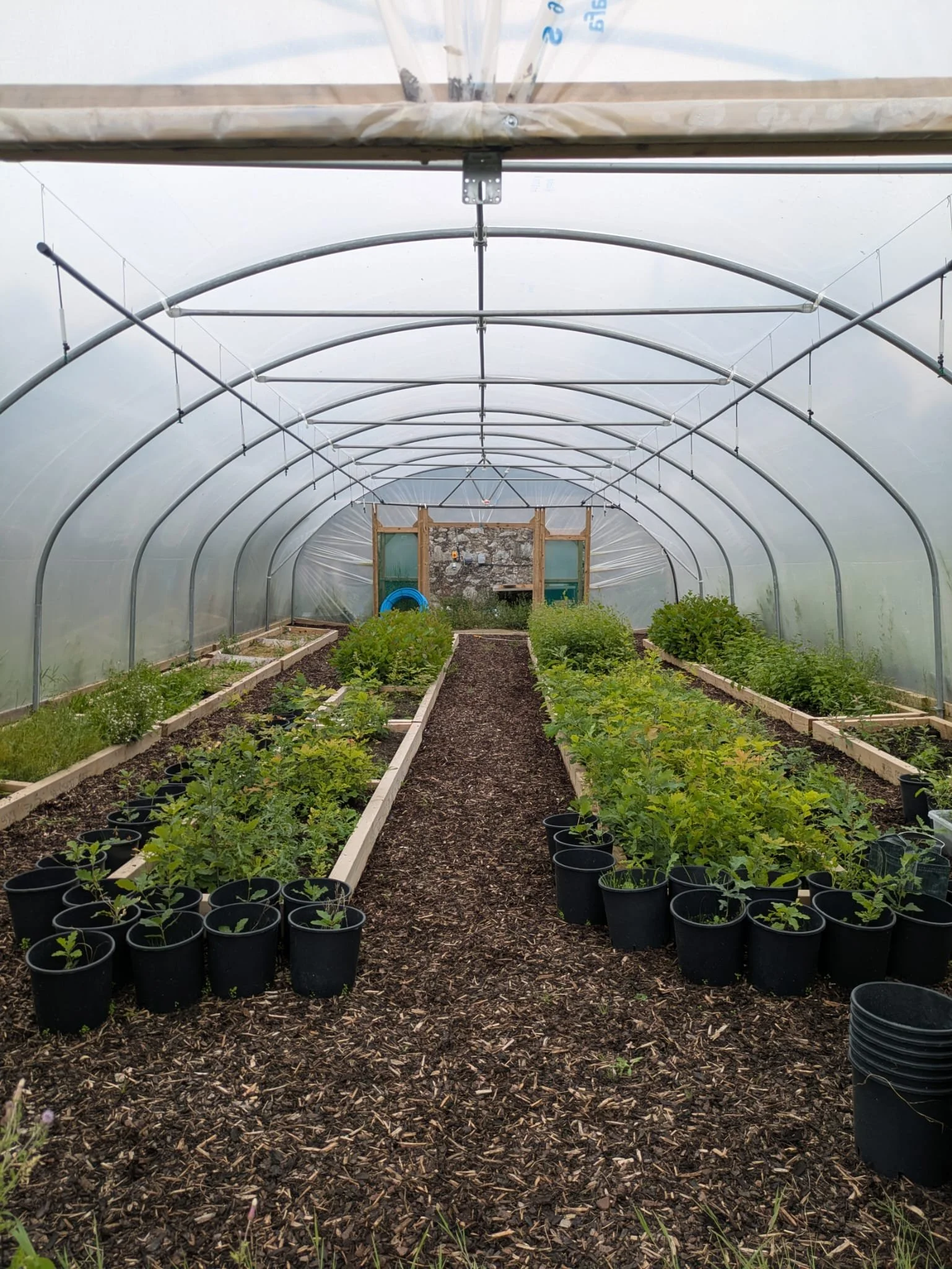
We’ve recently installed an irrigation system in our tree nursery at Townley Hall – a welcome addition during this hot weather! Thanks to all our volunteers who kept the nursery watered until now, and who continue to help maintain it with weeding and potting up, among other things!
This work is part of our Floodplain Woodlands Restoration project, which aims to protect and restore native woodlands in the Boyne Catchment. In weather like this, we are reminded of the importance of trees in managing river temperatures. Trees provide shade and resulting cooler areas in the water, vital for river life such as our precious Salmon.
If you’d like to donate to our project, you can do so here: https://www.boyneriverstrust.ie/support-us
Water-friendly Farming Project
Over the past year, we have engaged 30 farmers from around the Boyne catchment on our Water-friendly Farming Project (“Boyne River Protection Project”). Each farmer received a Farm Visit by our Farm Advisor, Sarah, and a bespoke Farm Plan for Water Protection, with advice on management and interventions to protect water quality on their farms. Feedback has been excellent, and we look forward to continuing to work with the participating farmers to support them in implementing on-farm water protection measures, and planting trees from our Tree Nurseries along rivers.