Himalayan Balsam
What is Himalayan Balsam?
Scientific name: Impatiens glandulifera
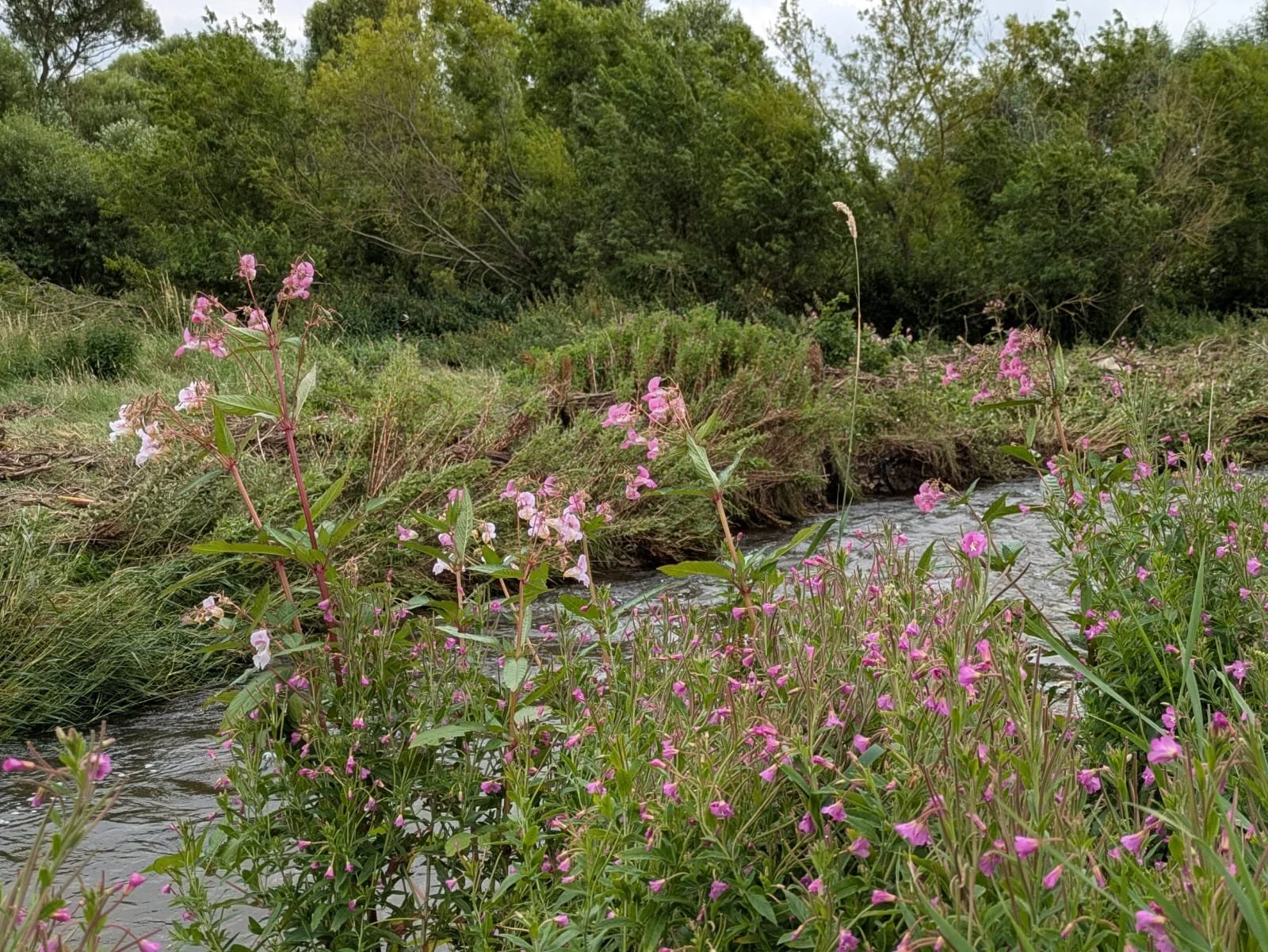
Himalayan Balsam is an invasive species threatening our rivers and other habitats.
First introduced as an ornamental plant in the 1830s, Himalayan Balsam has spread throughout Ireland and is disrupting ecosystems. It is commonly found in damp areas, such as the banks of rivers, streams and lakes, ditches, damp meadows, and woodlands.
Why is it a problem?
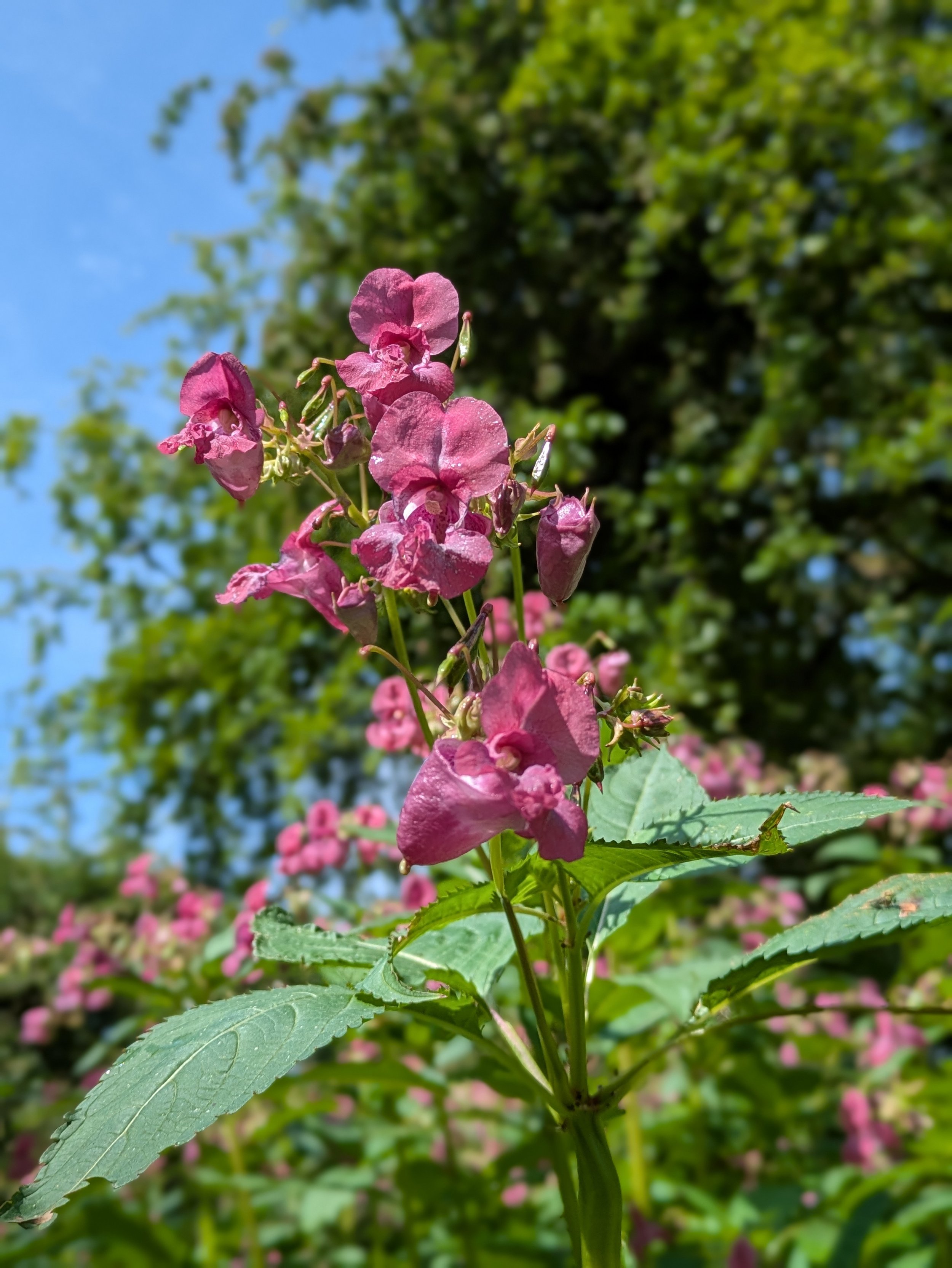
Himalayan Balsam is rapidly outcompeting our native plants for space, light and nutrients. It grows tall, up to 3m high, and forms dense continuous stands, shading out other plants.
Water Quality
When it dies off in autumn and winter, it leaves the banks bare of vegetation, and susceptible to erosion. This has numerous knock-on effects. For one, dead plant material deposited in waterways can create blockages and increases the nutrient load of the water. Furthermore, erosion of the banks can lead to siltation of fish spawning grounds, bank instability, and increased flood risk.
Biodiversity
Himalayan Balsam is known to negatively impact native plant diversity, reducing plant species richness by 25%. It also promote the spread of other invasive species, by altering the soil fungal communities. Stands of Himalayan Balsam also support lower diversity of insects in the orders Coleoptera (beetles) and Hemiptera (true bugs). The plant also creates competition for pollinators with native flowering plants.
How to identify Himalayan Balsam
Habitat: Himalayan Balsam thrives in damp soils, such as along waterways and in woodlands.
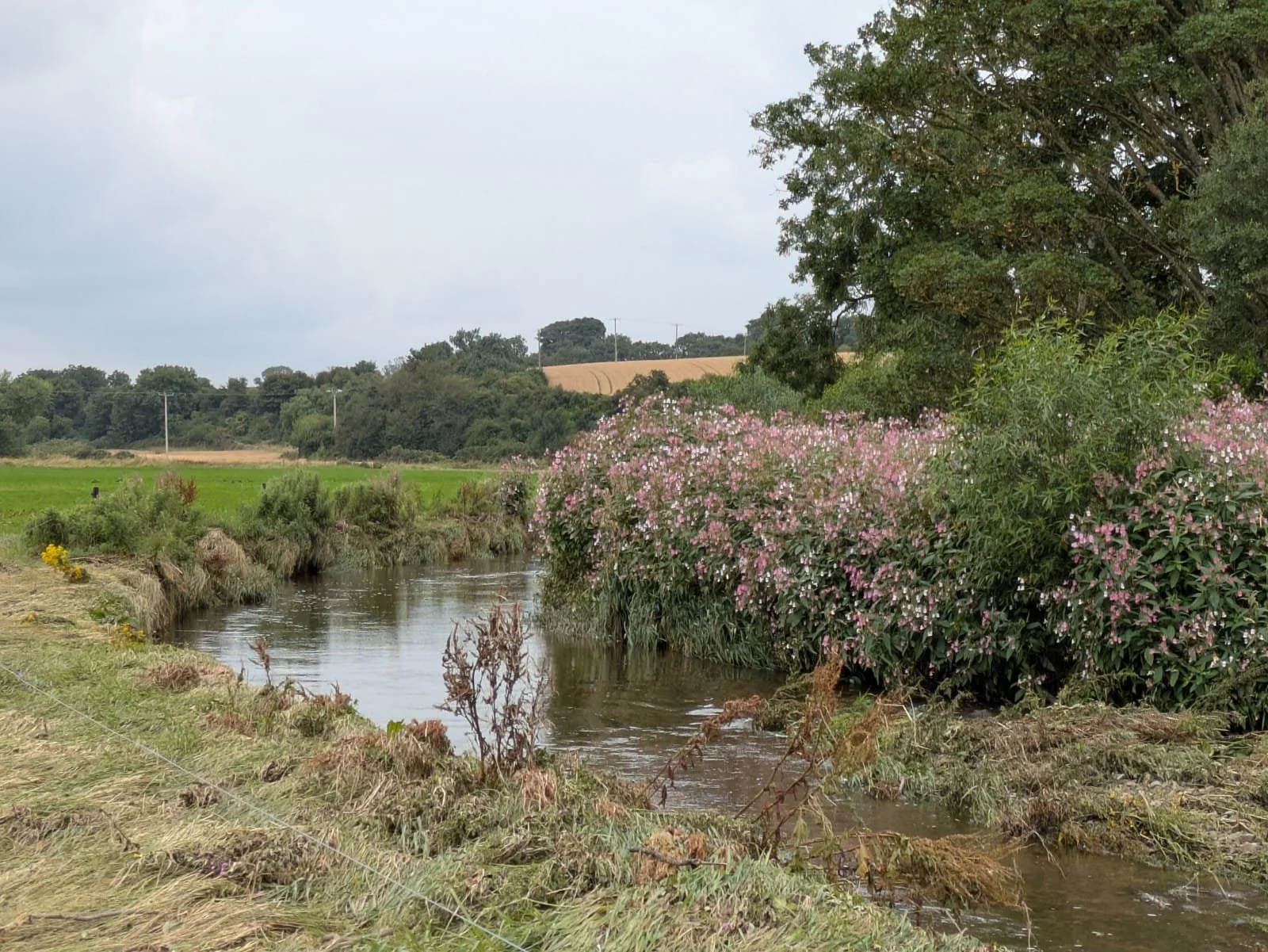
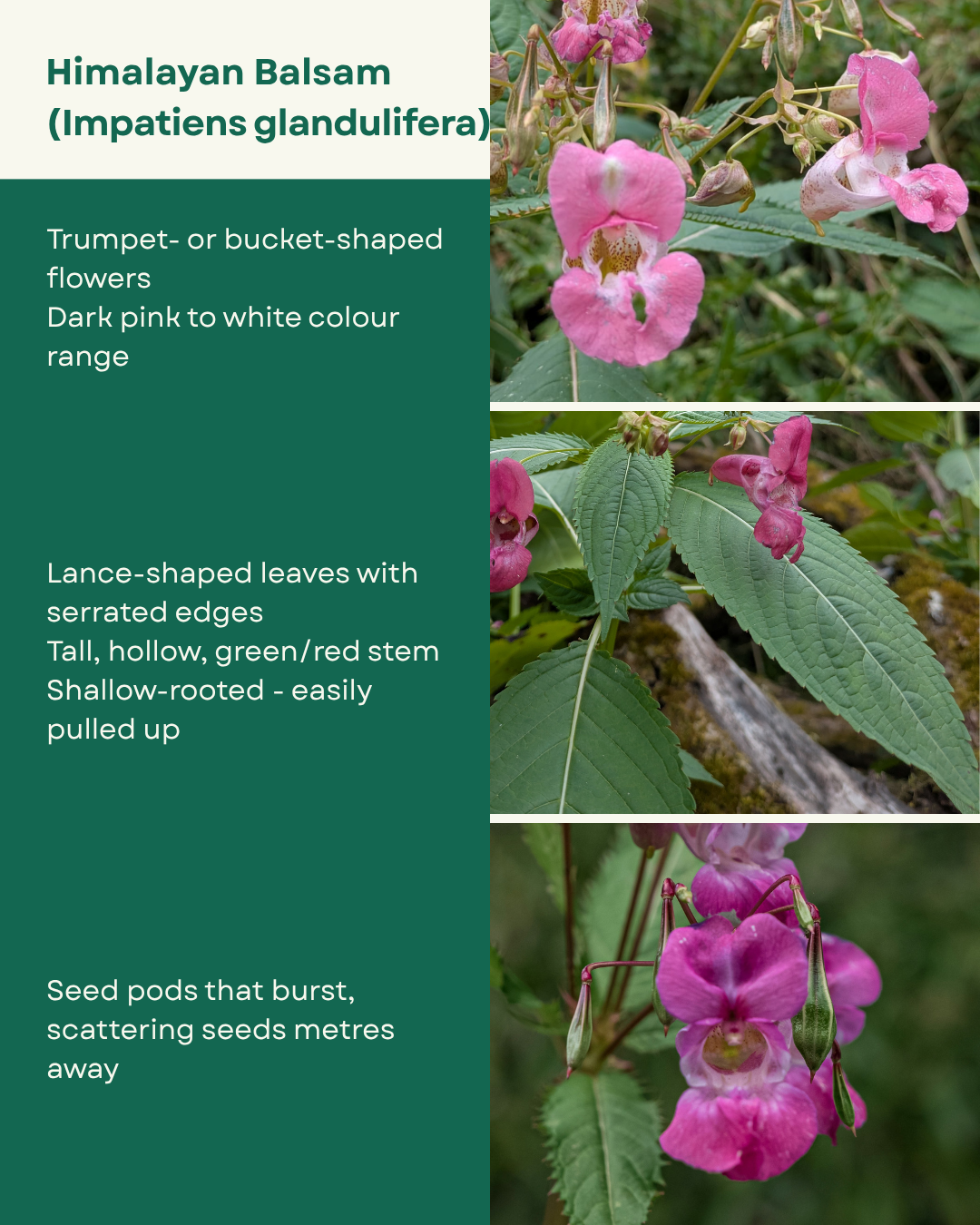
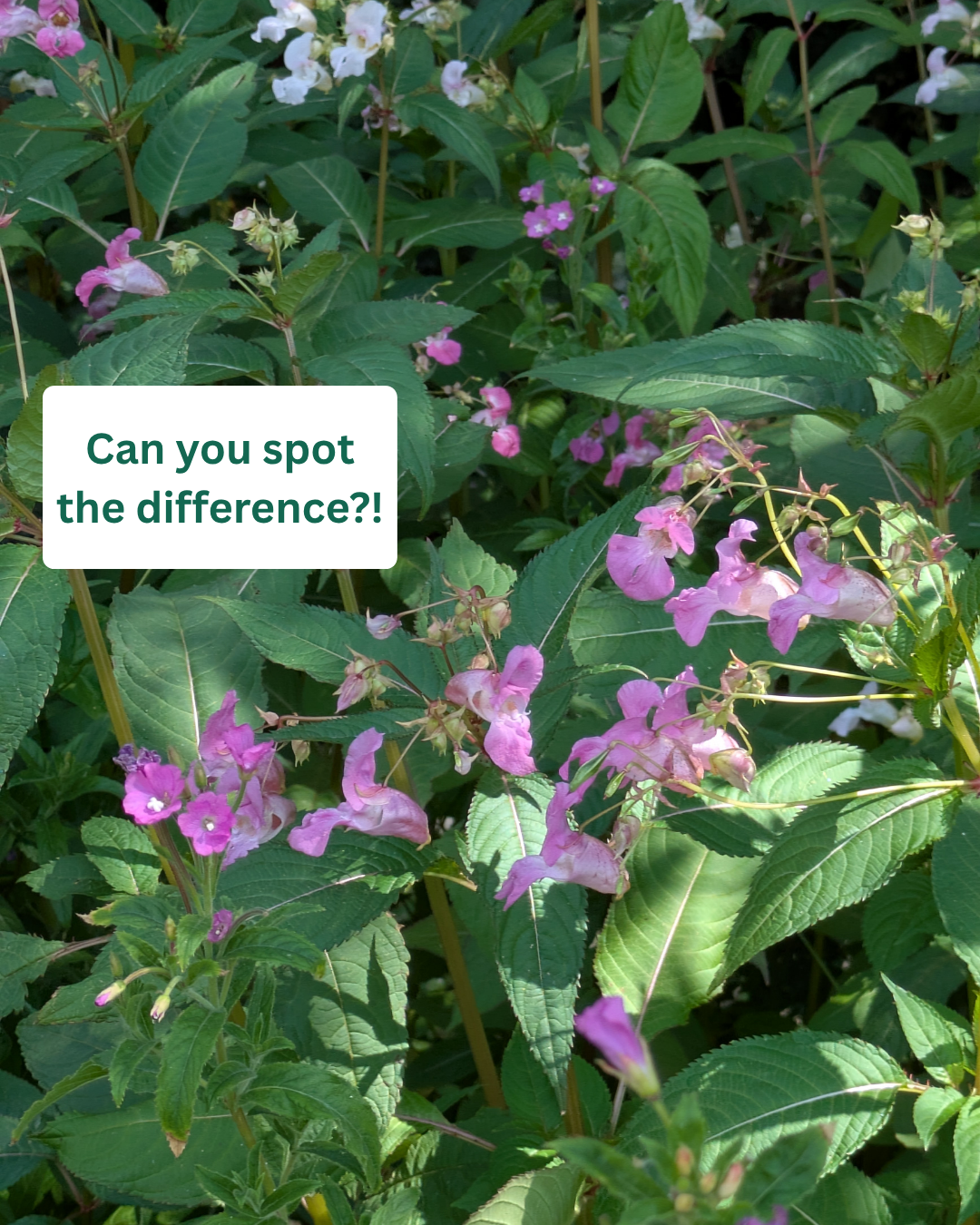
Flowers: Trumpet-shaped flowers, pink-purple in colour, with wide petals. 2.5-4cm long. Flowers in June to October.
Leaves: Dark green in colour. Lance-shaped, with serrated edges and pointed tips. Up to 15cm long.
Seeds: Hanging explosive seed pods, approximately 2.5cm long. Explode on touch when ripe, dispersing seeds up to 7m away. Produces thousands of seeds per pod.
Height: Grows to up to 3m tall
Stems: Hollow, fleshy, brittle. Hexagonal cross-section. Green-red early in the year, pink-red in the summer.
Roots: Short roots, and forms side shoots/roots along the stem.
Reproduction: By seed only.
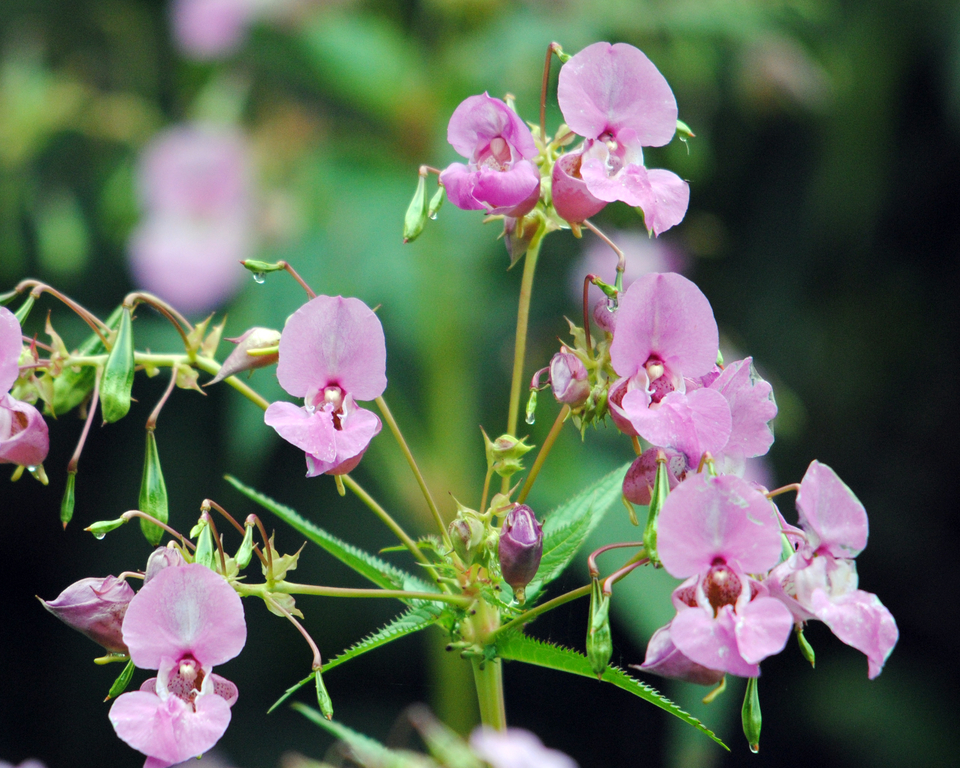
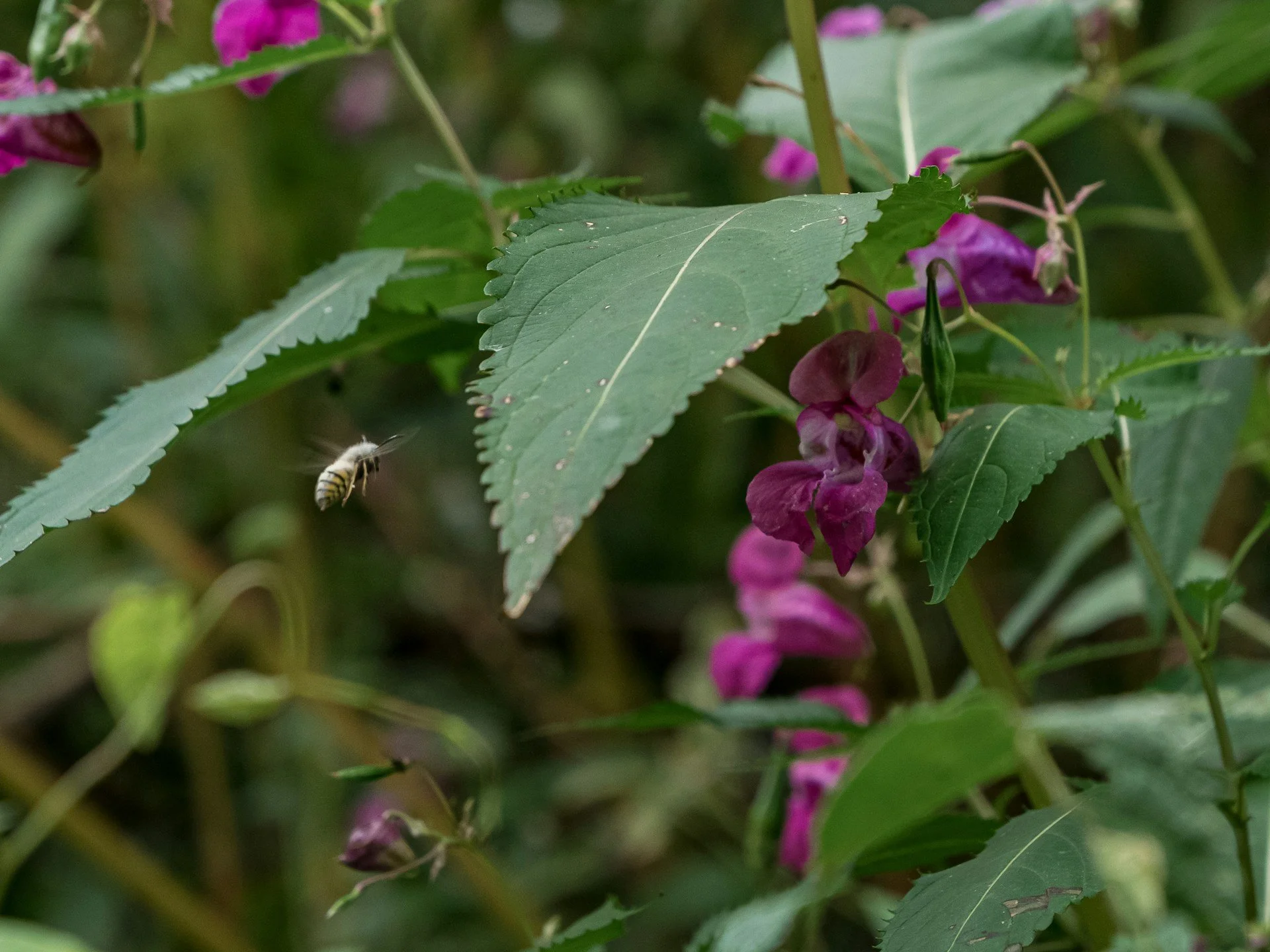


Balsam Bashing on the River Mattock and River Clady
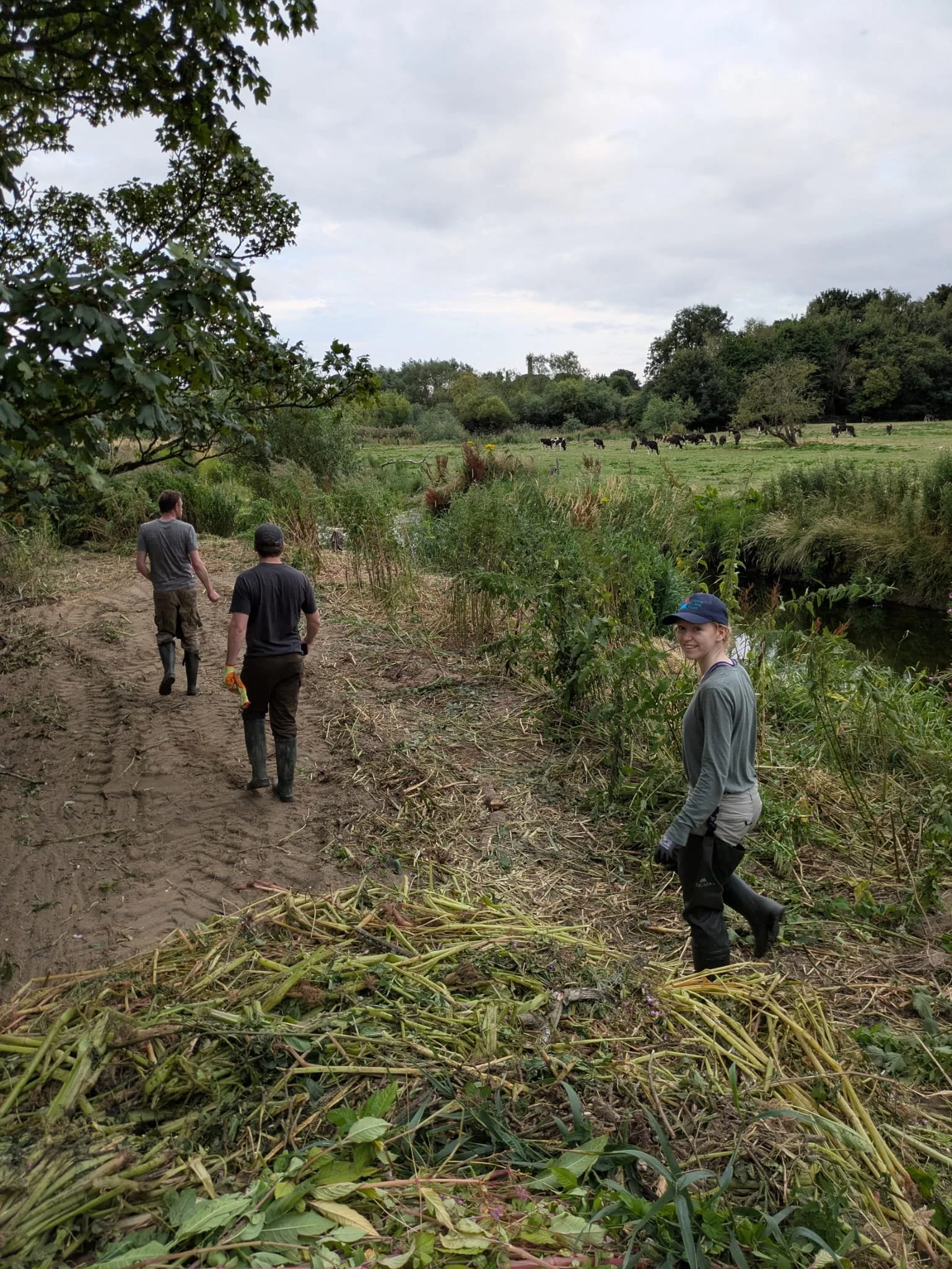
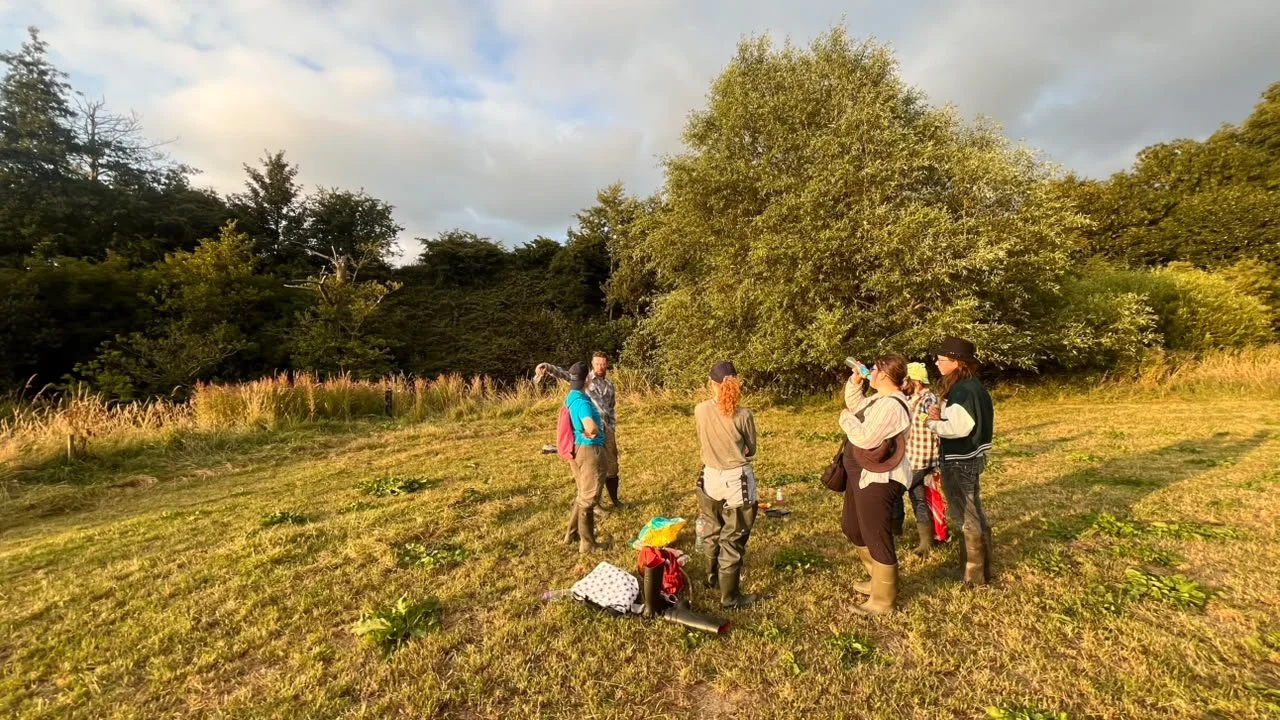
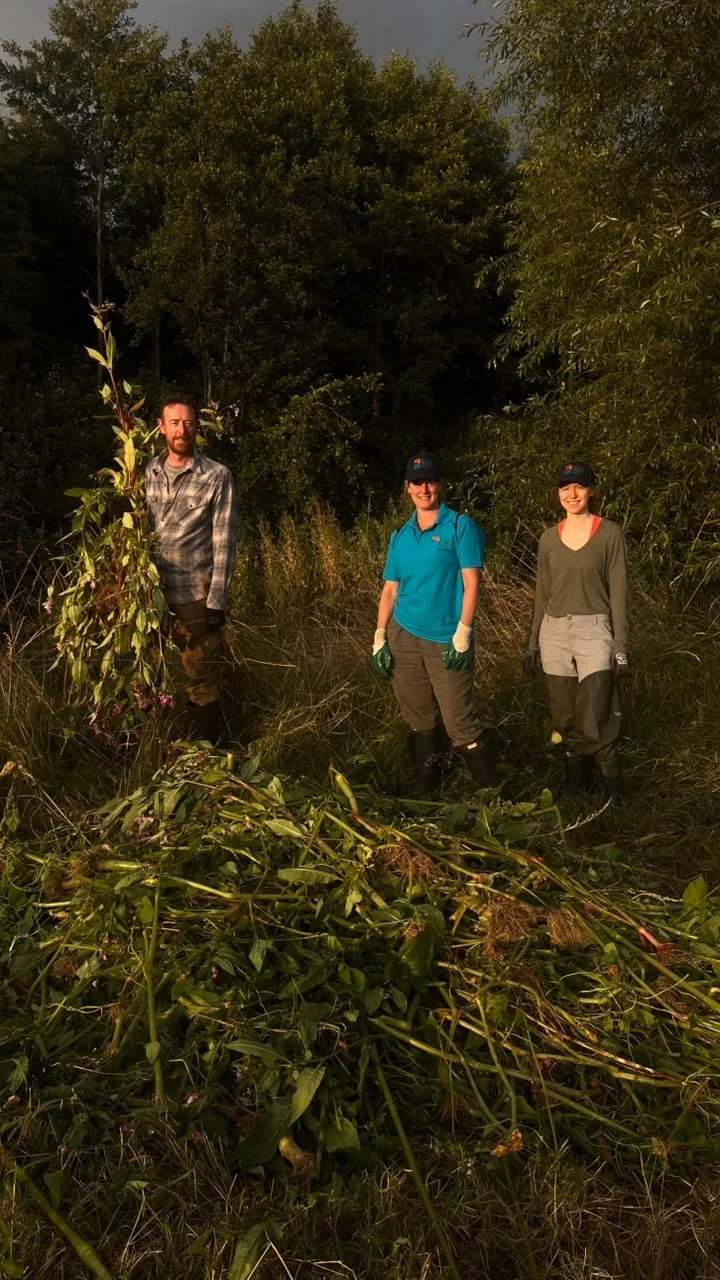
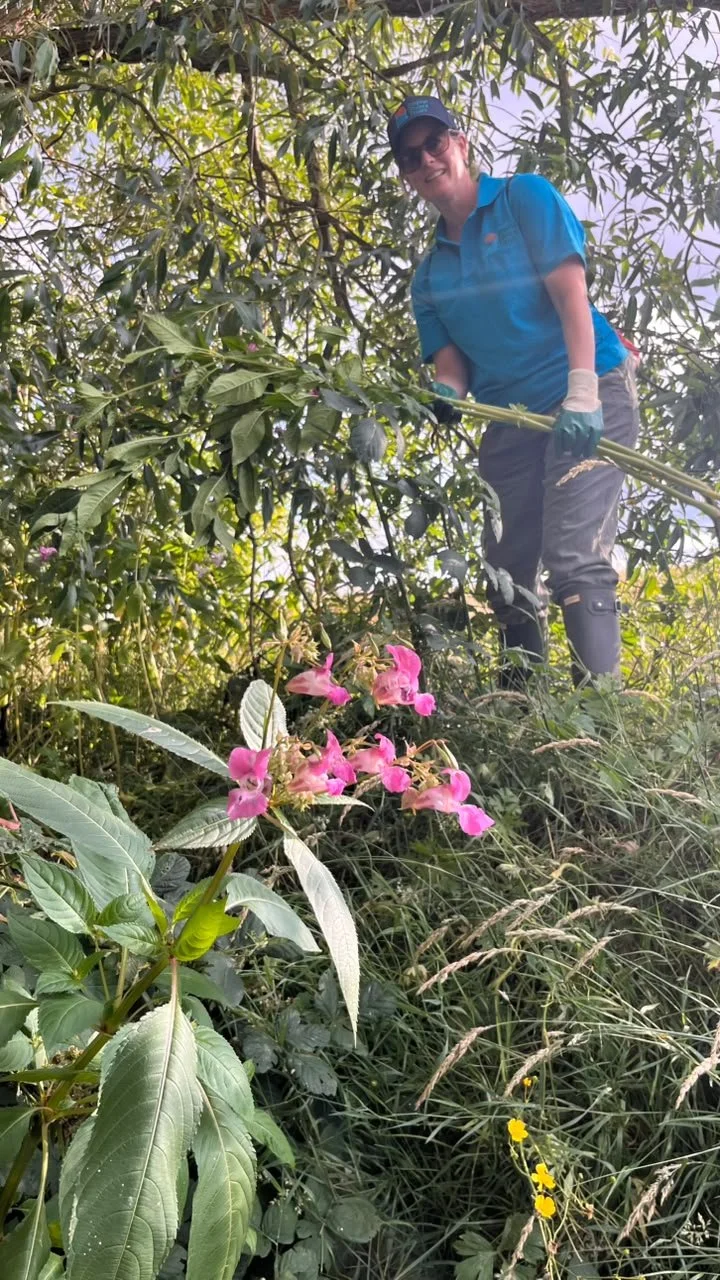
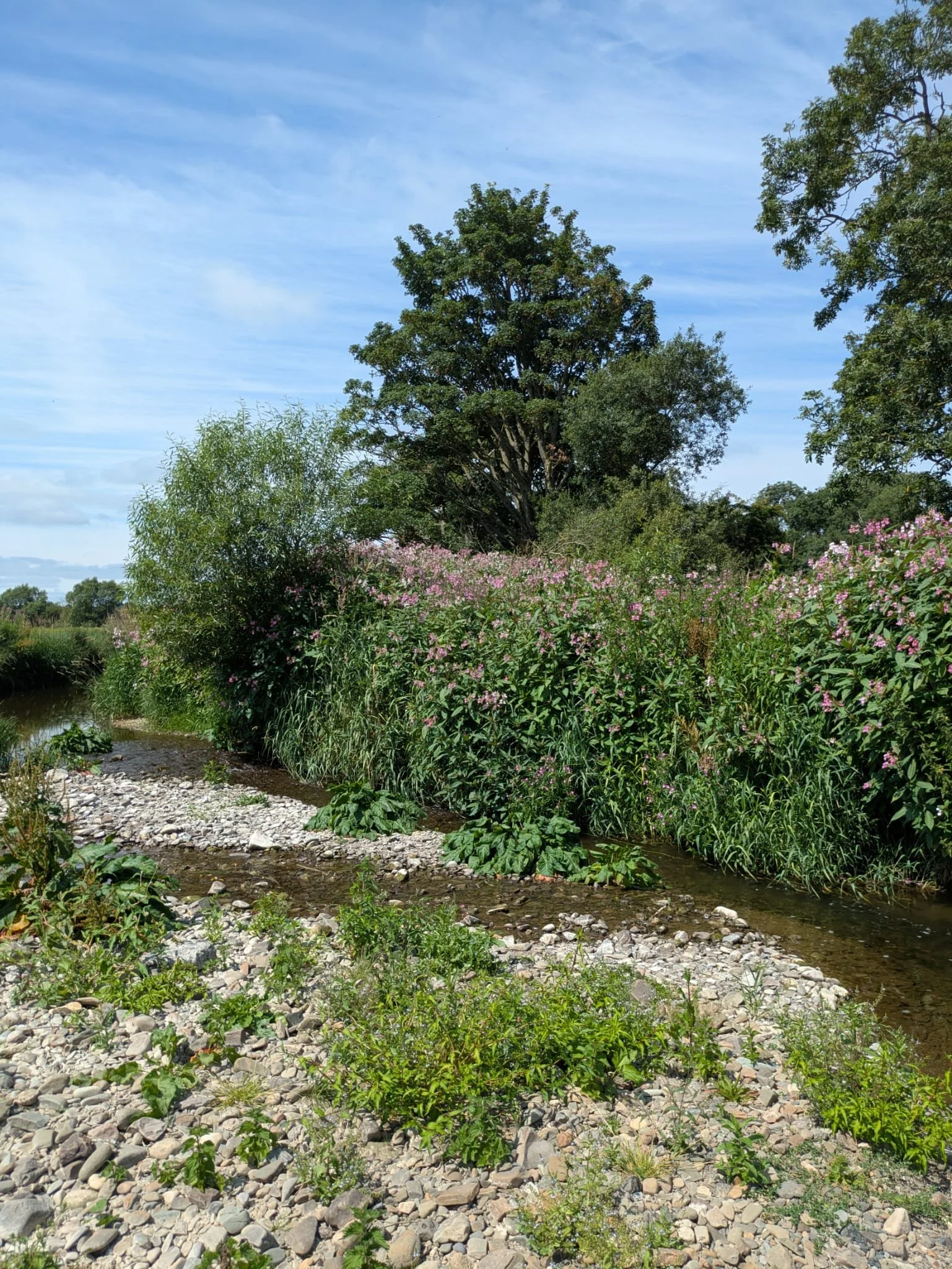
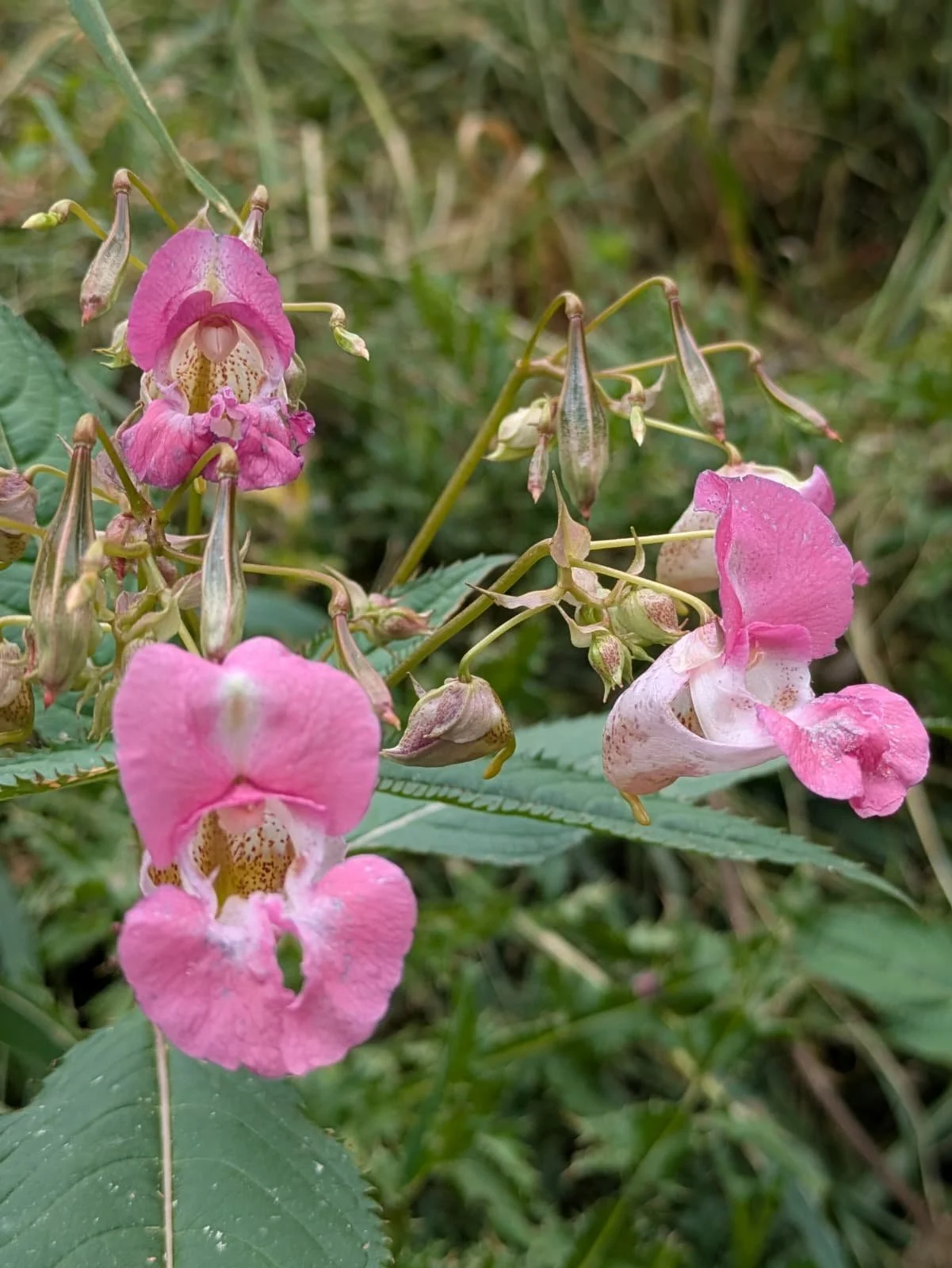
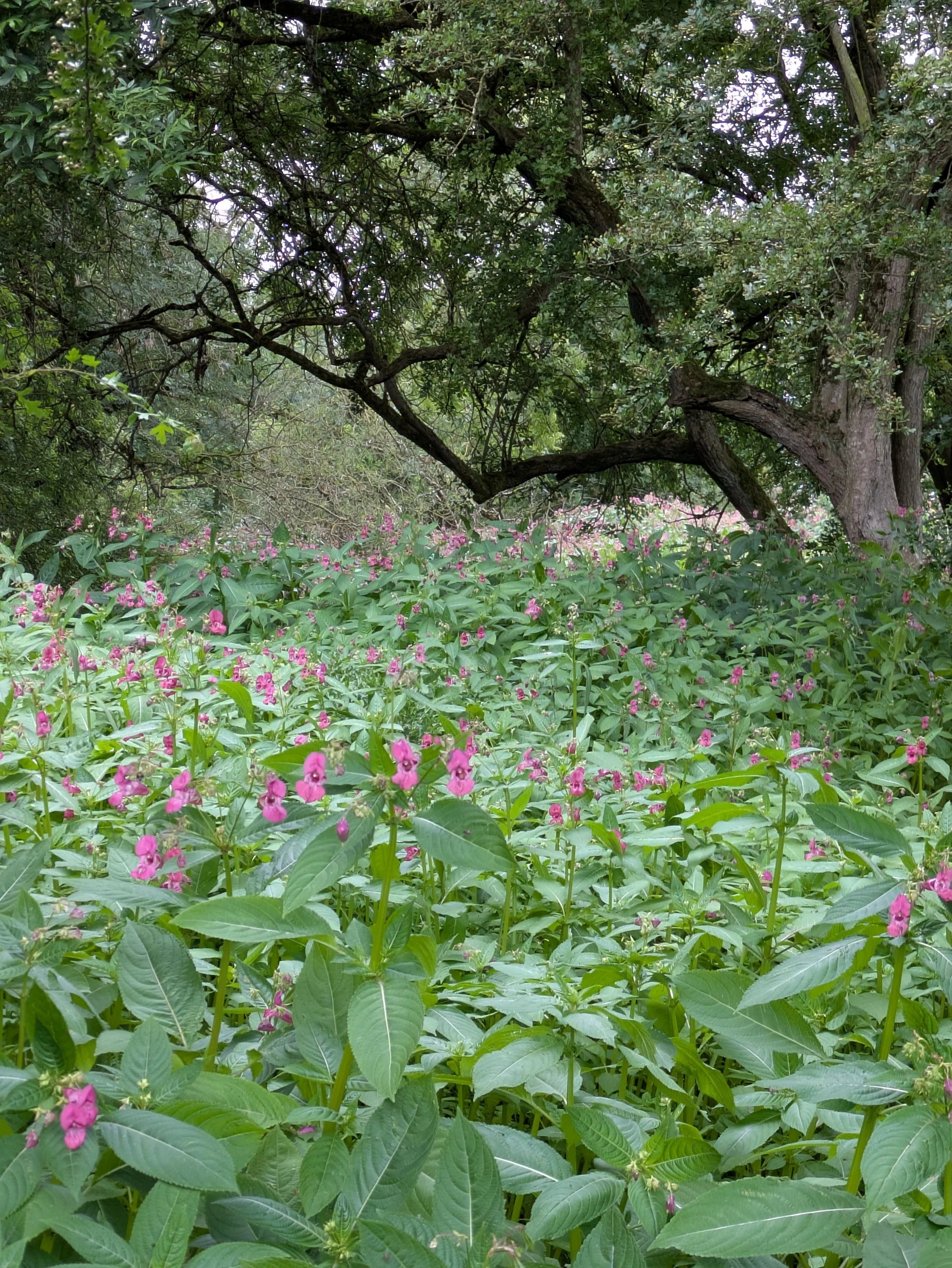
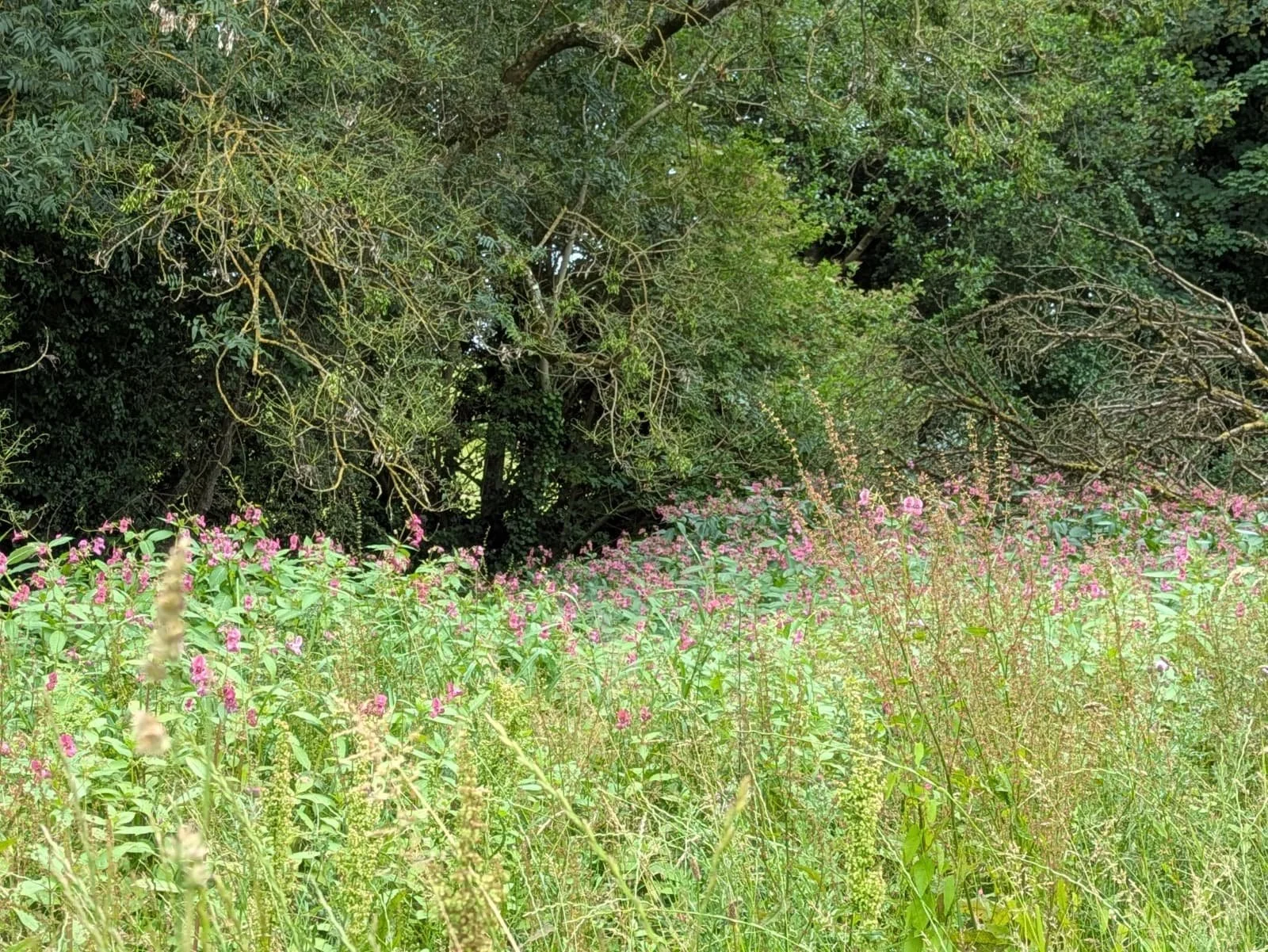
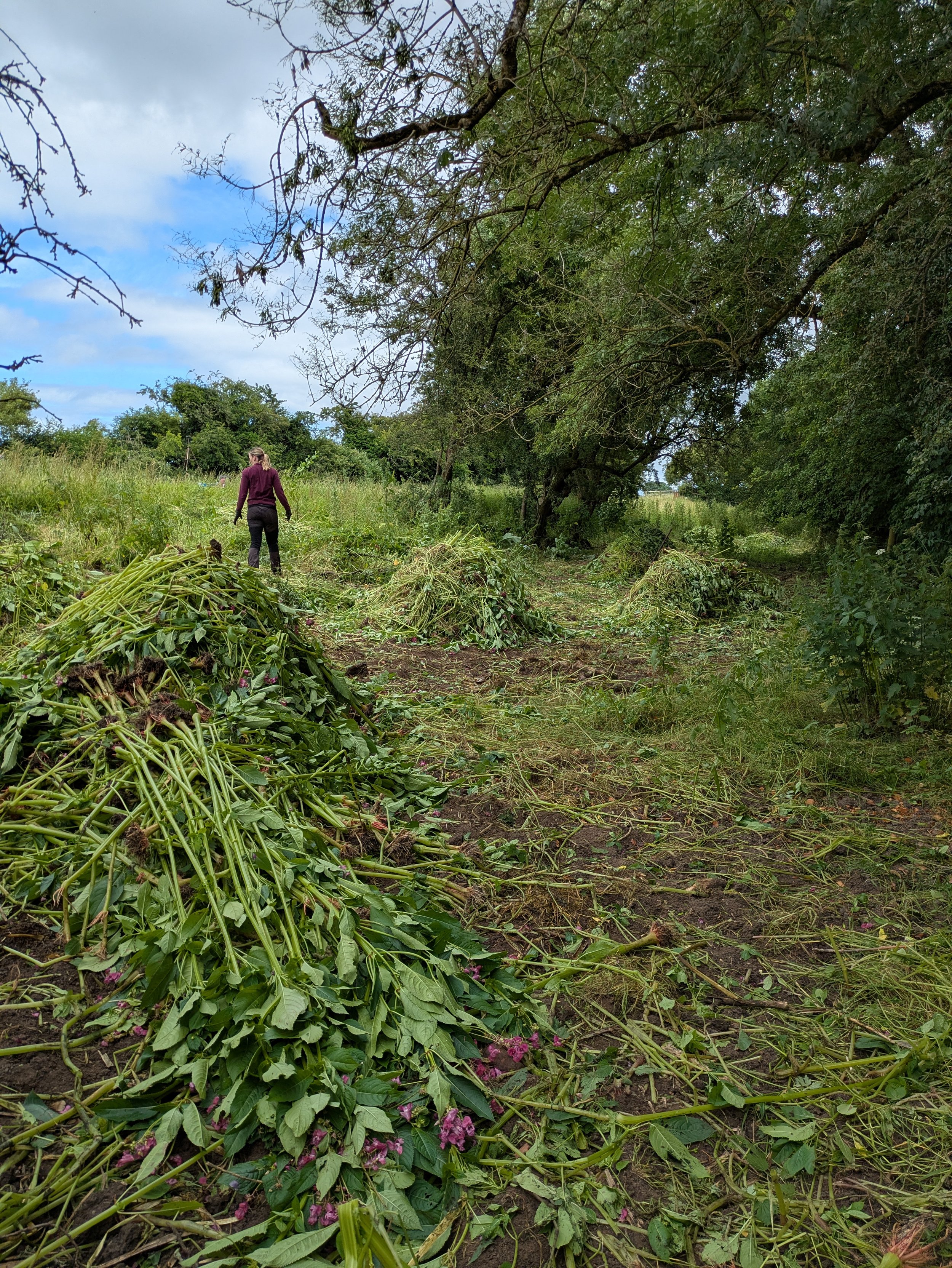
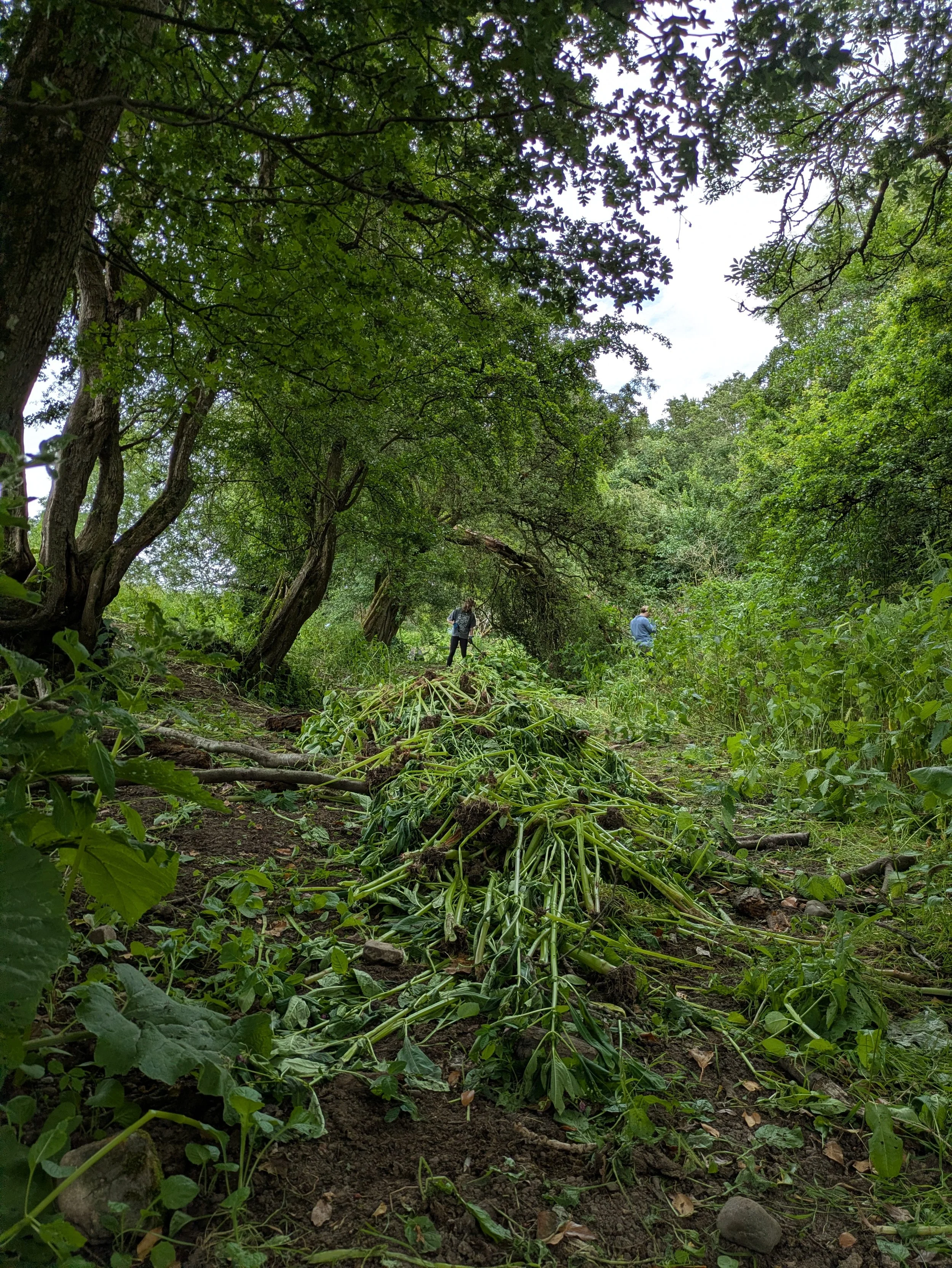
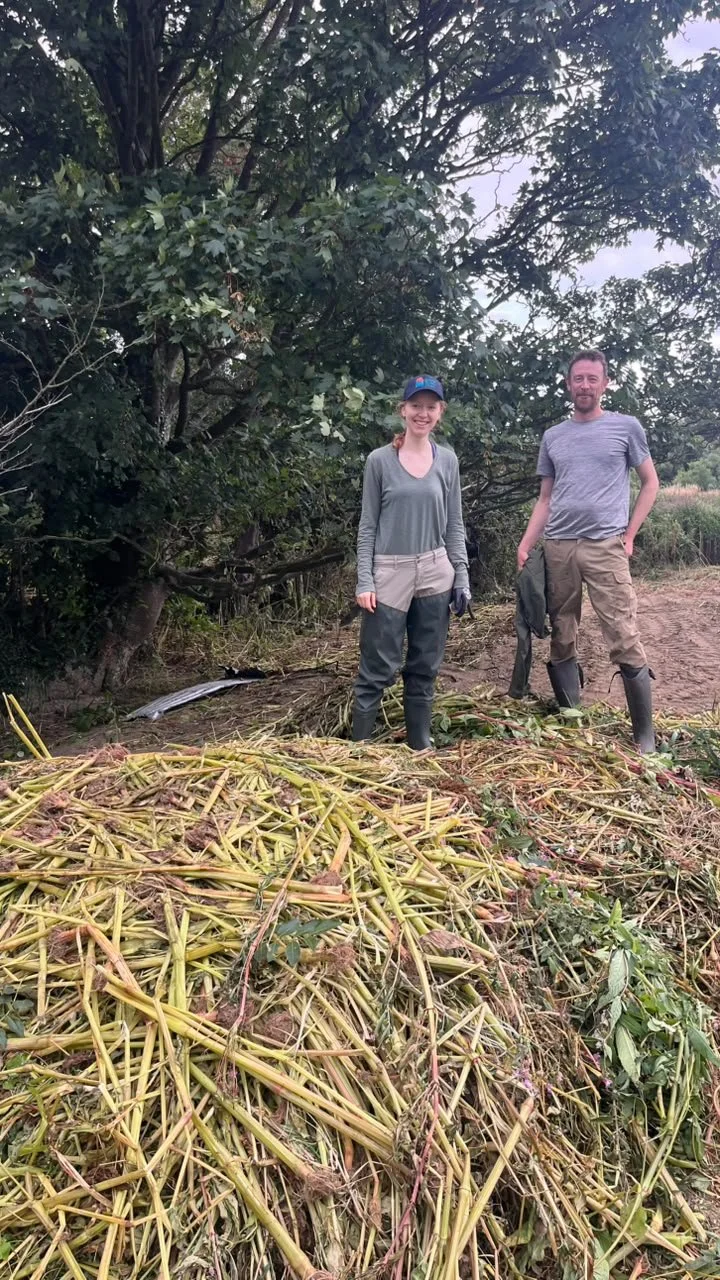
“Balsam Bashing” - Removing Himalayan Balsam
Himalayan Balsam can be removed by hand effectively, thanks to its shallow roots. This should be done ideally before the plant flowers, and definitely before seed pods are set. Please be careful of environmental hazards, such as riverbanks, during Balsam Bashing activities.
Along waterbodies, balsam removal efforts should start at the most upstream point of issue and work downstream.
The plant should be gripped about 1 metre above the ground and pulled, to avoid breaking the stem with the root still in the ground. Two or three plants can be removed in one go, and usually minimal pressure is required.
Once removed, snap the stem between the root and the first ‘node’.
Plant material should be thrown landward, away from waterbodies, and gathered into large piles. These can be left to decompose in situ, covered with jute or hessian material to eliminate light. The jute will rot down with the plant material. Alternatively, the plant material may be transported to an appropriate, licensed composting facility.
To prevent other non-native species from taking over areas cleared of Himalayan Balsam, it is best to combine removal efforts with the enhancement of native plant species.
Himalayan Balsam seeds can remain viable for 2 years, although they typically germinate within the first year. Therefore, it is recommended to repeat removal efforts the following year.
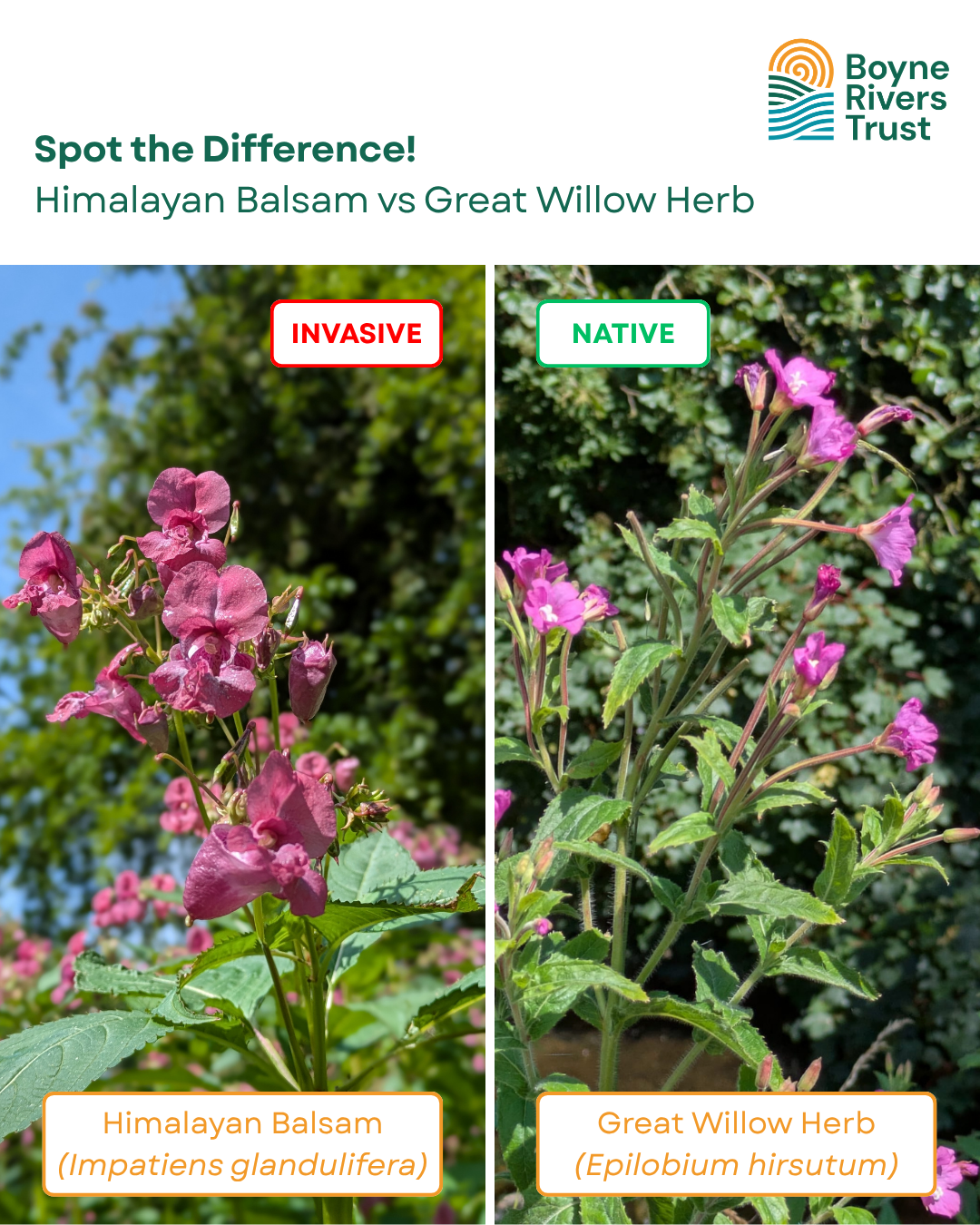
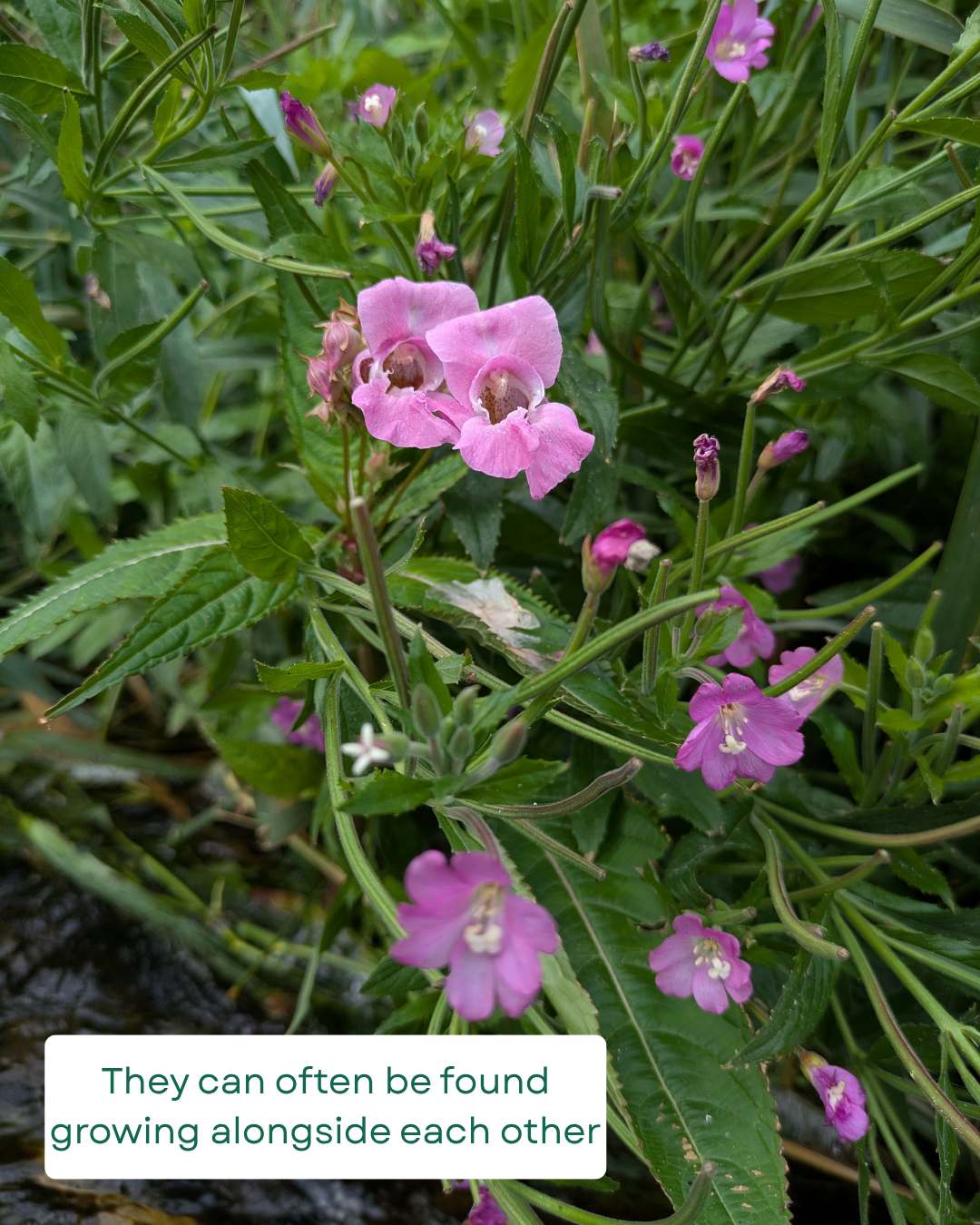
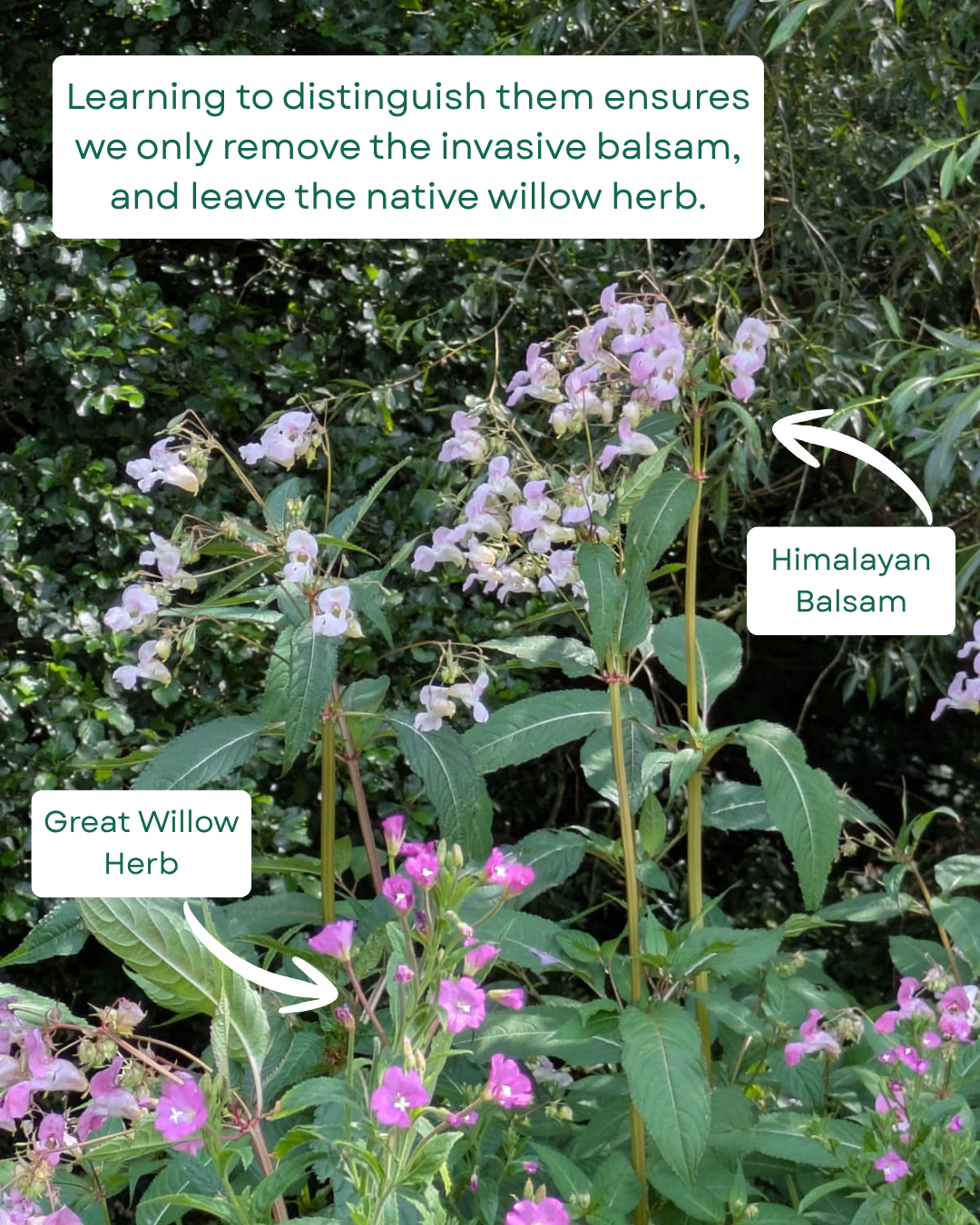
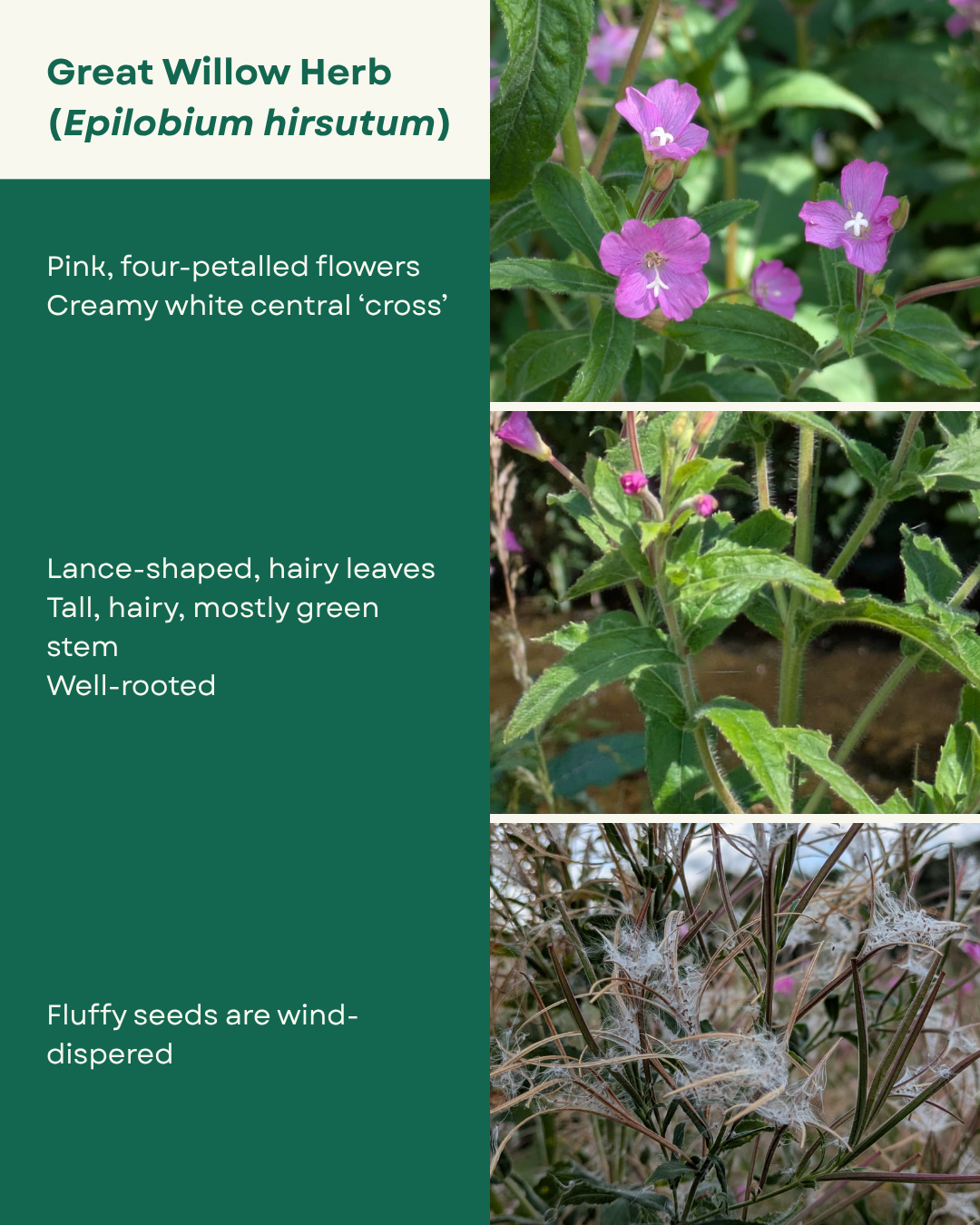
Spot the Difference!
Himalayan Balsam vs Great Willow Herb
Sources
National Biodiversity Data Centre. Impatiens glandulifera | Himalayan Balsam - Species Profile. Available at: https://species.biodiversityireland.ie/profile.php?taxonId=28772&taxonName=impatiens&hasProfile=true
National Biodiversity Data Centre. Himalayan Balsam Impatiens glandulifera. Available at: https://invasives.ie/app/uploads/2022/01/Himalayan-Balsam_PRINT.pdf
Invasive Species Ireland. Himalayan balsam. Available at: https://invasivespeciesireland.com/wp-content/uploads/wp-post-to-pdf-enhanced-cache/1/himalayan-balsam.pdf
INVAS Biosecurity. Himalayan Balsam. Available at: https://invasivespecies.ie/himalayan-balsam/
The Wildlife Trusts. Himalayan Balsam. Available at: https://www.wildlifetrusts.org/wildlife-explorer/wildflowers/himalayan-balsam
Our Funders